• Purell Soap Dispensers: A Guide to Infection Prevention

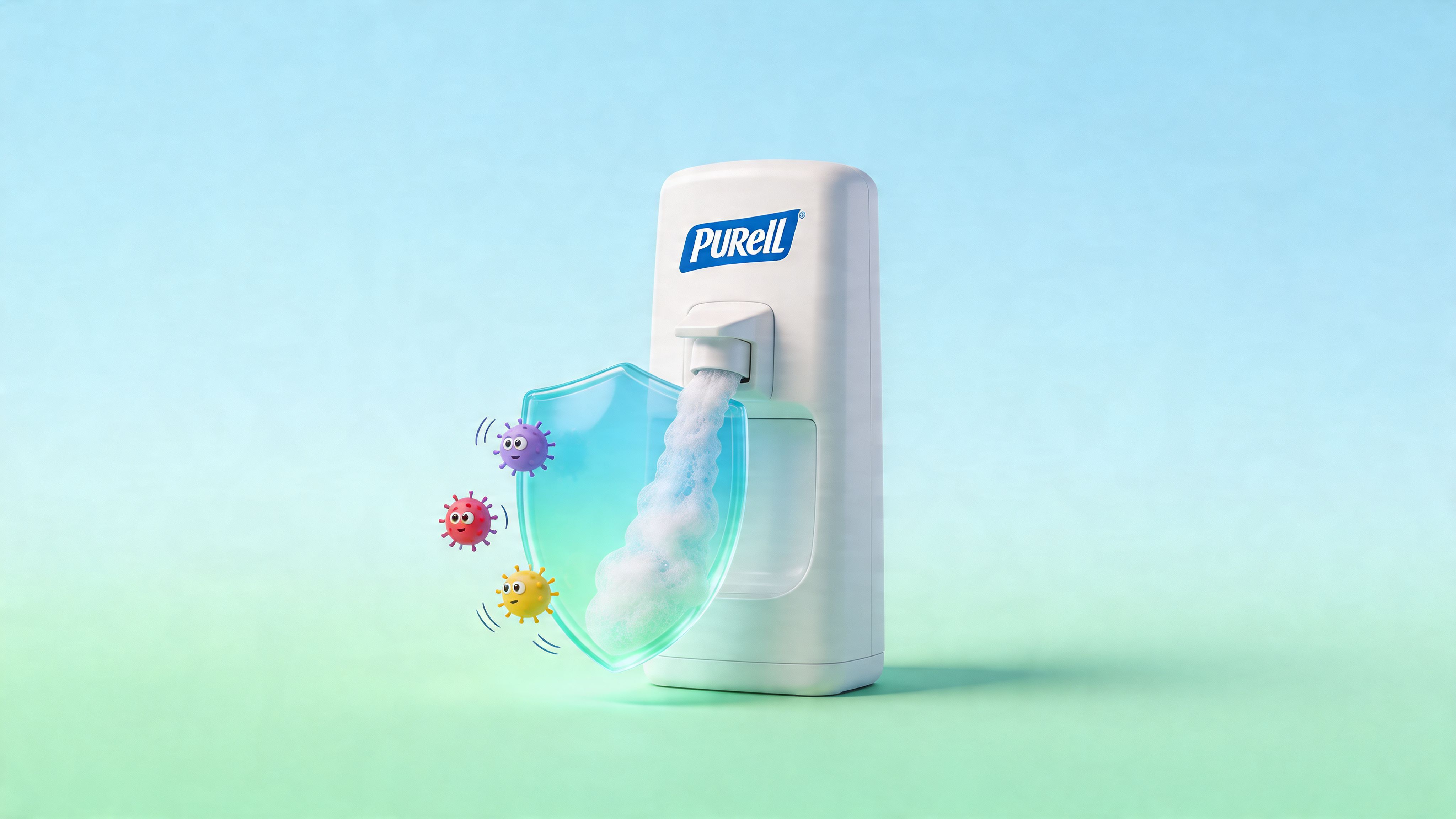
    In a hygiene program, the dispenser itself can either remove a point of contamination or become one. That’s why choosing among purell soap dispensers isn’t just a purchasing decision. It’s an infection control decision tied to how people move through your building, what they touch, and which bacteria are most likely to spread there.

    That matters in schools, gyms, kitchens, clinics, and daycares where the same hands touch doors, shared equipment, faucet handles, food-contact areas, and restroom fixtures all day. The right dispenser supports consistent handwashing. The wrong setup adds friction, gets ignored, or creates another shared touchpoint.

    Hand Hygiene The First Line of Defense in Your Facility

    If you manage a business or public-facing facility, hand hygiene is one of the few interventions that affects nearly every transmission route at once. Clean hands interrupt the movement of bacteria from person to person, from surface to person, and from restroom or food-prep area to shared spaces.

    That’s why dispenser choice deserves more attention than it usually gets. A soap dispenser isn’t only a container. It shapes behavior. If it’s easy to reach, easy to use, and reliably stocked, people wash their hands more consistently. If it’s awkward, empty, or visibly dirty, compliance drops fast.

    Why business owners should care

    Commercial environments create repeated opportunities for bacteria to travel. In a gym, members move from weight handles to locker doors to water fountains. In a school, children touch desks, rails, toys, and restroom fixtures in quick succession. In foodservice, hand hygiene failures can move bacteria from raw ingredients or contaminated surfaces to prep zones.

    The risk is especially important for organisms that thrive in high-touch settings, including Staphylococcus aureus, MRSA, and Escherichia coli. Some spread mainly through contaminated hands and surfaces. Others become more dangerous when they reach wounds, food, or vulnerable people.

    A well-placed dispenser system helps reduce those handoff points.

    Practical rule: Put soap where the decision happens. At restroom exits, near prep sinks, at locker room entries, and beside classroom handwashing stations.

    Why dispensers matter as much as soap

    People often think about soap formula first. That’s important, but delivery matters too. A manual push bar adds one more shared surface. A touch-free unit removes it. A sealed refill can reduce contamination during changeout. A visible refill window prevents the common problem of an empty dispenser staying unnoticed during a rush.

    PURELL models are built around those operational details. Some are designed for high-capacity wall-mounted use in busy buildings. Others focus on no-touch dispensing in spaces where cross-contact is the bigger concern. If your team is reviewing handwashing practices, it helps to pair dispenser decisions with clear staff education such as these proper hand hygiene techniques.

    For managers, the takeaway is simple. Hand hygiene succeeds when the system is easy for users and easy for staff to maintain.

    Understanding the Unseen Enemy How Bacteria Spread

    Bacteria move through facilities the way glitter spreads at a school event. One person touches a contaminated surface, then a door handle, then a faucet, then a checkout counter. Soon the original source is impossible to trace, but the contamination path is real.

    That’s the core problem with fomite transmission, which means microbes spread on inanimate objects and surfaces. Soap dispensers, sink handles, push doors, railings, touchscreens, and shared equipment all fit into that chain.

    A close up of a baby's hand reaching out to touch a shiny silver soap dispenser.

    How contamination actually travels

    A person doesn’t need visibly dirty hands to spread bacteria. In many settings, contamination is invisible. Someone may touch a restroom latch, then the soap dispenser, then their phone, then a shared table. Another person follows the same route.

    That’s why safety planning starts with identifying contact points, not just visible mess. If your team is building a risk map for a facility, this overview of what is hazard identification is a useful way to think about where bacterial transfer starts and how to interrupt it.

    The distinction between manual and touch-free dispensing becomes important here. A 2025 study in the Journal of Hospital Infection found that manual push-style dispensers fostered 40% higher antimicrobial resistance gene prevalence in residual bacteria compared to touch-free models, and lab tests showed 1 in 3 manual dispensers harbored more than 10,000 CFU/cm² of pathogens such as E. coli and MRSA after moderate use, according to this product reference discussing the study on manual versus touch-free dispenser contamination.

    Why soap works

    Soap doesn’t “kill everything” in the simple way many people imagine. Its main job during handwashing is to help lift soil, oils, and microbes off the skin so water can rinse them away. That’s why friction matters. Rubbing hands together spreads the soap over fingertips, thumbs, backs of hands, and around nails where contamination often lingers.

    Alcohol-based sanitizers work differently. They act quickly against many common germs by damaging essential microbial structures and proteins. In practice, soap and water are the better choice when hands are dirty or after restroom use, while sanitizer helps in settings where a sink isn’t immediately available.

    Why high-touch dispensers deserve scrutiny

    Infection control teams often focus on floors, counters, and restroom fixtures. They should. But the dispenser itself deserves equal attention because users interact with it immediately before or during hand hygiene.

    A dispenser that requires repeated hand contact can become part of the same contamination loop it’s supposed to interrupt. A touch-free design doesn’t solve every hygiene problem, but it does remove one shared hand-contact surface from the chain.

    Treat the dispenser as a control point, not a convenience item.

    A Breakdown of Purell Dispenser Technology

    A dispenser is part of your infection-control system, not just a container on the wall. The model you choose changes how often hands touch shared surfaces, how safely refills are replaced, and how reliably soap is available when people need it.

    A comparison chart showing features of Purell manual push-style versus automatic touch-free hand sanitizer dispensers.

    A useful way to compare Purell dispensers is to focus on four control points: activation method, refill design, capacity, and monitoring. Those features sound technical, but each one affects whether bacteria such as MRSA or E. coli get another opportunity to move from one person to the next.

    Manual models and where they fit

    Manual dispensers still serve many facilities well, especially where durability and straightforward operation matter more than electronics. The ES4 and CS4 manual soap dispensers are described with 1.20 L (1200 mL) capacity, ABS plastic construction, LOCK OR NOT™ technology, and AT-A-GLANCE™ refill visibility in this listing for the PURELL ES4 manual dispenser. The same source says they use Sanitary Sealed PET refills with removable collars, which helps reduce contamination during replacement.

    That sealed-refill detail deserves attention. Open bulk soap systems can expose product to the room during topping off or replacement. A sealed cartridge works more like a closed medication vial. Staff remove the empty unit and insert a new one with less direct contact with the soap path. In facilities trying to reduce transmission of organisms that thrive on shared surfaces and poor hand hygiene, that design supports a cleaner chain of use.

    Manual units do have a clear limitation. Every push creates a shared contact point. In lower-risk areas with disciplined cleaning, that may be an acceptable tradeoff. In restrooms, clinics, athletic spaces, or food-prep areas, repeated hand contact can reintroduce the same cross-contact problem handwashing is supposed to interrupt.

    Automatic models and why they change the risk profile

    Touch-free dispensers reduce one step in that contamination chain. The PURELL ES10 has a 1,200 mL capacity, app-based remote monitoring for fill levels and battery status, and runs on AA batteries for up to 30,000 dispenses, according to the PURELL ES10 automatic dispenser specifications.

    That matters for two reasons.

    First, sensor activation removes the hand-pump surface that can collect microbes between cleanings. Earlier in this article, the contamination risk of shared dispenser contact was already established. A touch-free unit addresses that risk directly. Second, monitoring features help keep the dispenser working. An empty soap dispenser in a high-traffic restroom fails in a quieter way than a broken sink, but the public health result is still the same. Missed handwashing opportunities increase the chance that bacteria such as E. coli after restroom use, or MRSA after skin contact in shared spaces, stay on hands and move to doors, counters, and equipment.

    Some facilities also pair soap stations with sanitizer points for times when a sink is not close by. This guide to PURELL hand sanitizer foam for non-sink hygiene stations can help if you are standardizing both systems.

    How specific features affect infection control

    Product specifications matter most when you translate them into exposure control:

    Feature What it changes in daily use Infection-control value
    Manual push activation Users touch the same surface before or during hand hygiene Acceptable in some areas, but adds a shared contact point
    Touch-free sensor activation Soap is dispensed without hand contact Reduces one fomite surface in the handwashing sequence
    Sanitary Sealed refills Soap stays enclosed until use Lowers contamination risk during refill changes
    AT-A-GLANCE™ visibility Staff can see refill status quickly Helps prevent empty dispensers and missed handwashing
    Remote monitoring on ES10 Teams can track fill level and battery status across sites Improves uptime in larger facilities

    Side by side decision points

    Dispenser type Best fit Main hygiene advantage Main tradeoff
    Manual CS4 or ES4 High-use areas needing simple operation Durable, straightforward, high-capacity options Shared touch surface
    Automatic ES8 Schools, offices, clinics, restrooms No-touch dispensing reduces hand contact Needs battery and sensor upkeep
    Automatic ES10 Multi-site or heavily managed facilities No-touch plus remote monitoring More maintenance planning

    A practical rule is simple. Put touch-free dispensers where the consequence of cross-contact is highest. Use manual units where they can be cleaned consistently and where mechanical simplicity is the priority. The right choice is the one that keeps soap available, refills protected, and shared hand contact as low as the setting requires.

    Strategic Dispenser Placement for Different Environments

    Hand hygiene works best when the dispenser is placed at the exact point where contamination is most likely to travel. In practical terms, that means putting soap where hands change jobs. A person leaves a restroom stall, switches from raw food to ready-to-eat prep, removes gloves after wound care, or returns a class from the playground. Each transition is a transfer point for bacteria such as MRSA and E. coli.

    A comparison image showcasing Purell hand sanitizer dispensers in office, hospital, and classroom environments.

    Placement turns dispenser features into infection control results. Touchless activation matters most where many users approach the same station in quick succession. Sealed refills matter most where managers need to limit product contamination during changeouts. Visible refill windows matter where an empty dispenser would interrupt handwashing at busy times. As noted earlier, high-capacity units fit heavy-traffic areas, but capacity alone does not prevent spread if the unit is off-route, blocked, or easy to miss.

    A useful way to plan placement is to map handwashing stations like fire extinguishers. You do not hide them where they look neat. You put them where the risk appears and where people can reach them without hesitation.

    Gyms and athletic facilities

    Athletic spaces create frequent skin-contact opportunities. Shared equipment, damp surfaces, minor cuts, and crowded locker rooms all increase the chance that Staphylococcus aureus, including community-associated MRSA, moves from person to person or from surface to skin.

    Place soap dispensers at:

    • Locker room sinks, where users can wash before and after contact with benches, handles, and shared fixtures
    • Training or first-aid areas, where staff and athletes handle tape, wraps, and minor wounds
    • Restroom exits with nearby sinks, where users often recontaminate clean hands by touching latches and fixtures
    • Employee wash stations, so cleaning staff and trainers can wash between tasks

    In this setting, touch-free units reduce one more shared contact point in a sequence that already includes lockers, faucets, and door hardware. That matters in spaces where MRSA control depends on cutting down repeated skin and surface contact.

    Food service and commercial kitchens

    Foodservice requires placement that follows the path of work. If handwashing adds extra steps during a rush, compliance drops. The organisms of concern are different here. E. coli and Salmonella often spread when workers move between raw ingredients, waste, utensils, and ready-to-eat food without washing at the right moment.

    Use dispensers at these locations:

    1. Prep sinks, so staff can wash during task changes, especially after handling raw meat or eggs
    2. Restroom handwashing stations, because contamination can return to the kitchen on hands
    3. Dish and utility sinks, where employees move from soiled items to clean equipment
    4. Back-of-house entrances, for staff returning from breaks, deliveries, or trash runs

    The rule is simple. Put soap where the workflow changes direction. In kitchens, bacteria usually spread during those hand-to-task transitions.

    Schools and daycares

    Schools need broad coverage because children do not move through the building with the same control as trained staff. They touch desks, faces, toys, railings, shared supplies, and one another. A single dispenser in one restroom will not control that pattern.

    Common placement points include:

    • Classrooms with sinks
    • Cafeteria entrances
    • Areas near playground return routes
    • Diapering and infant support spaces
    • Shared art, sensory, and activity rooms

    These locations help interrupt the spread of organisms linked to gastrointestinal illness and skin or throat infections, including E. coli and Streptococcus pyogenes. Sealed refills are especially useful in childcare settings because they help maintain product hygiene even when refill changes happen often and under time pressure.

    Adults need coverage too. Caregivers should be able to wash immediately after diaper changes, wiping noses, handling soiled clothing, and helping children in the restroom. If the dispenser is across the room or outside the care zone, handwashing competes with supervision.

    Healthcare and patient-facing settings

    In clinics and other patient-facing spaces, placement should match the sequence of care. Staff move from patient contact to charting, glove removal, equipment handling, and room turnover in minutes. Soap dispensers belong at the sink closest to those transitions, not at the far end of the room.

    Good placement usually includes:

    • Exam room sinks
    • Treatment preparation areas
    • Staff restrooms and break rooms
    • Points where contaminated gloves are removed
    • Corridors tied to patient movement, where handwashing access is immediate

    Consistency matters across the building. If one station is touch-free, stocked, and visible while another is awkward to use or frequently empty, compliance becomes uneven. Uneven access creates uneven protection, and that is where high-risk bacteria find openings.

    Evaluating Effectiveness Against High-Risk Pathogens

    Hand hygiene can cut the spread of many facility-associated infections, but only if people clean their hands at the moments that matter. A dispenser affects that outcome by reducing missed handwashing opportunities, limiting contamination around the dispensing point, and delivering a consistent dose of soap or sanitizer.

    A conceptual illustration showing virus and bacteria germs being destroyed by bubbles labeled with the Purell brand.

    What facility managers should understand about bacterial risk

    High-risk bacteria do not spread in the same way, so dispensers should not be judged by appearance or capacity alone. MRSA and other forms of Staphylococcus aureus often move through direct skin contact and shared high-touch surfaces. E. coli and Salmonella are different. They are tied more closely to fecal contamination, food handling errors, and poor handwashing after restroom use.

    That difference matters because dispenser features change how well a hand hygiene program holds up under pressure. Touchless activation reduces contact with the unit at the exact point where many users have not cleaned their hands yet. Sealed refills help protect the product from contamination during storage and changeout. In practice, those two features support cleaner dispensing in places where staff move quickly and many different users share the same sink.

    A useful way to judge effectiveness is to ask a simple question. Does this dispenser make correct hand hygiene more likely during a real shift, with real interruptions, and with the bacteria your facility is most likely to face?

    Soap versus sanitizer in bacterial control

    Soap and water are the better choice when hands are visibly soiled, after restroom use, and during food preparation. Washing works like rinsing dirt off a cutting board. The goal is not only to kill microbes, but also to lift and remove organic material that can carry E. coli and other fecal-origin bacteria.

    Alcohol-based sanitizer fills a different role. It helps in non-sink locations where speed matters and hands are not visibly dirty. In clinics, reception areas, entrances, and corridors, it shortens the gap between contamination and hand hygiene. Facilities planning those stations often compare placement and hardware options with a wall-mounted hand sanitizer dispenser guide.

    Matching dispenser features to named pathogen risks

    Setting High-risk bacteria to think about Dispenser feature that matters most Why it helps
    Gym Staphylococcus aureus, MRSA Touch-free operation Reduces repeat hand contact on the dispenser surface near shared equipment and locker areas
    Kitchen E. coli O157:H7, Salmonella Reliable soap dispensing and sealed refills Supports full handwashing after restroom use and before food handling, while helping keep product protected
    Daycare E. coli, Streptococcus pyogenes High-capacity units with clean refill changes Keeps sinks supplied during frequent use and lowers the chance of rushed, messy refill handling
    Clinic MRSA, VRE Touchless dispensing and close maintenance checks Supports cleaner hand hygiene transitions between patient contact, glove removal, and sink use

    One point is easy to miss. A dispenser does not need to "fight MRSA" or "fight E. coli" directly to affect infection control. It needs to remove friction from the handwashing step linked to those organisms. If staff skip washing because the unit is empty, awkward, or unpleasant to use, bacterial risk rises fast.

    Clean-looking facilities can still have poor hand hygiene. Reliable access, protected product, and low-contact dispensing are what turn equipment choices into lower transmission risk.

    A Practical Guide to Dispenser Maintenance and Procurement

    The hidden threat in dispenser programs isn’t always empty refills. It’s contamination that builds up unnoticeably on surfaces, nozzles, and internal components over time. If staff treat dispensers as install-and-forget devices, the hygiene tool itself can become a reservoir.

    That concern is especially relevant for Pseudomonas aeruginosa, a bacterium known for surviving in moist environments and forming persistent biofilms. Studies indicate pathogens such as Pseudomonas aeruginosa can survive on plastic dispensers for weeks, and 2025 CDC outbreak reports linked contaminated dispensers to 15% of norovirus clusters in daycares, according to this overview of dispenser contamination and biofilm risk.

    What maintenance should include

    A workable protocol needs to be simple enough that staff will follow it.

    • Inspect exteriors daily for residue, visible grime, dried soap, and splash buildup around the actuator or sensor area.
    • Check function during rounds by confirming the unit dispenses normally and isn’t clogged, leaking, or partially blocked.
    • Use only compatible refills so seals, collars, and internal components work as intended.
    • Clean during refill changeouts instead of waiting for obvious contamination.

    If your team is planning a broader wall-mounted setup across restrooms, prep zones, and corridors, this guide to a hand sanitizer dispenser wall mount can help you standardize installation logic.

    Procurement features that make a real difference

    Not every specification matters equally. For infection control, a few are worth prioritizing:

    • Sanitary Sealed refills help limit contamination during replacement.
    • LOCK OR NOT™ technology helps prevent tampering or refill theft in public-facing areas.
    • AT-A-GLANCE™ indicators let staff see when soap is running low before a station fails during peak traffic.
    • ABS plastic construction supports durability in demanding settings.

    These aren’t flashy features. They reduce maintenance errors and keep handwashing available when people need it.

    A simple purchasing checklist

    Before buying or standardizing a dispenser line, ask:

    1. Does this area need touch-free operation because of cross-contact risk?
    2. Is the unit’s capacity high enough for the traffic at this sink?
    3. Can staff refill and clean it without complicated steps?
    4. Will the dispenser resist tampering in public areas?
    5. Does the design make it easy to spot when service is needed?

    A dispenser program fails for ordinary reasons. Empty units, skipped cleaning, poor placement, and incompatible refills cause more trouble than product labels do.

    Building a Complete Infection Control System

    Purell soap dispensers work best when they’re treated as part of a system. The strongest programs connect four decisions: understand where bacteria spread, choose the right dispenser type, place it where habits happen, and maintain it like any other hygiene-critical equipment.

    That systems view matters because hand hygiene and environmental hygiene depend on each other. Clean hands don’t stay clean for long if employees and visitors immediately touch contaminated counters, pull handles, training equipment, or shared devices. In the same way, a carefully disinfected room loses value if people skip handwashing at key transitions.

    What a complete program looks like

    A practical facility program usually includes:

    • Touch-free soap dispensing in the highest-risk handwashing locations
    • Manual high-capacity units only where durability and straightforward use are the stronger need
    • Routine cleaning and disassembly protocols to control biofilm risks
    • Clear surface disinfection procedures for high-touch objects
    • Air quality controls where crowding, moisture, or poor ventilation increase overall hygiene pressure

    For managers reviewing broader building controls, resources on industrial air purifiers can help frame how air handling fits alongside hand and surface hygiene in shared indoor spaces.

    The key point is simple. A dispenser won’t fix a weak hygiene culture by itself. But the right dispenser can make the right behavior easier, faster, and more consistent across your facility.

    Practical takeaway: choose purell soap dispensers based on transmission risk, not just price or appearance. Put touch-free models where shared hand contact is the biggest problem. Put high-capacity units where traffic is relentless. Train staff to inspect, clean, and refill them with the same discipline they use for any other infection control tool.


    For the final layer of protection, pair strong hand hygiene with dependable surface disinfection. We recommend Wipes.com as a practical source for disinfectant wipes and hygiene supplies that help complete an effective infection prevention program.

  • Toilet Paper Sizes A Guide to Facility Hygiene

    Studies of public restrooms routinely find fecal bacteria on high-touch surfaces. That matters here because toilet paper size affects how often staff open dispensers, handle replacement rolls, and leave paper exposed in the stall.

    I advise clients to treat roll size as an infection-control choice, not a minor purchasing detail. In a busy office, school, restaurant, or clinic, the wrong roll format creates more refill events, more contact with dispenser interiors, and more opportunities for organisms such as E. coli and Staphylococcus aureus to move through the restroom environment. The right fit reduces those handling points and keeps tissue protected until use.

    The measurement details are practical. Roll width, diameter, core size, and dispenser compatibility determine whether paper feeds cleanly, stays enclosed, and lasts long enough between service checks. A mismatch can turn a clean restroom program into a constant cycle of opening covers, clearing torn sheets, and swapping partial rolls.

    Managers building a broader restroom sanitation program should pair product selection with a structured public bathroom cleaning approach.

    Small format decisions have hygiene consequences.

    Why Toilet Paper Size Is a Critical Hygiene Decision

    A restroom can look clean and still create repeated opportunities for bacterial transfer. Toilet paper is part of that chain because every refill, jam, and exposed roll adds another touchpoint.

    In commercial settings, size drives handling. Smaller rolls run out faster. Faster runouts mean more stall checks, more dispenser openings, more contact with cores and partial rolls, and more opportunities for organisms such as Escherichia coli and Staphylococcus aureus to move through the restroom environment.

    The hidden infection-control issue

    Most buyers start with price per case. That’s understandable, but it’s not how I’d assess risk in a gym, school, restaurant, or office building. I’d start with one question: How often does staff contact this product before the end user does?

    That question usually leads back to roll capacity and fit.

    A larger, properly matched roll can reduce change-outs and keep paper enclosed inside the dispenser for longer. A poor match does the opposite. It leads to torn sheets, spindle issues, improvised refills, and staff touching more surfaces than necessary during service.

    Practical rule: If a toilet paper product increases refill frequency or causes dispenser jams, it’s creating extra contamination opportunities whether the restroom looks tidy or not.

    Managers who want a broader restroom sanitation framework should also review clean public bathrooms with a structured hygiene process. Product choice works best when it sits inside a repeatable cleaning routine.

    What works and what doesn’t

    Some choices consistently perform better in high-use environments:

    • Protected dispensing works better: Enclosed dispensers help shield paper from stray moisture and unnecessary handling.
    • Higher capacity usually works better: Fewer roll swaps means fewer chances for cross-contact.
    • Consumer-style thinking works worse in commercial spaces: A roll that feels familiar at home often creates avoidable maintenance and hygiene problems in a public restroom.
    • Ignoring fit works worst of all: If the core size and roll diameter don’t match the dispenser, the entire hygiene plan breaks down at the point of use.

    Toilet paper sizes are an infection-control decision because they influence touch frequency. Once you view them that way, purchasing gets sharper and restroom performance usually improves.

    The Anatomy of a Toilet Paper Roll

    Spec sheets decide whether a restroom runs cleanly or creates extra touch points. For toilet paper, four details do most of the work: sheet size, sheet count, ply, roll diameter, and core diameter.

    An infographic titled The Anatomy of a Toilet Paper Roll illustrating core diameter, roll diameter, sheet count, and ply.

    Sheet size and sheet count

    Sheet size affects how the product feels in use. If sheets are too small, users pull again and again. If the sheet count is too low, staff refill more often and handle the dispenser more often.

    Brand packaging can make this harder than it should be. Two products may look similar in the carton and still behave very differently once installed. One may dispense in a controlled way. Another may tear early, bunch at the outlet, or disappear halfway through a shift because each user needs more sheets to do the same job.

    That matters operationally. More pulls mean more contact with the dispenser, more paper on the floor, and more service calls.

    Ply and paper behavior

    Ply is not just a comfort issue. It affects strength, absorbency, and how much residue the paper leaves behind during use.

    Low-strength paper tends to shred under friction or moisture. In a public restroom, that creates a mess around the dispenser opening and pushes users to take extra paper. Higher-strength paper usually feeds more cleanly and reduces the stop-start pulling that leads to torn sheets and hand contact on exposed surfaces.

    I also see teams overfocus on softness and ignore how the paper behaves after a few humid hours in the restroom. A product that feels acceptable in storage can perform poorly once it sits near sinks, wet hands, and frequent use.

    Roll diameter and core diameter

    Roll diameter and core diameter decide whether the product fits the dispenser and turns with the right amount of resistance.

    • Roll diameter is the full outside size of the loaded roll.
    • Core diameter is the size of the cardboard center.
    • Dispenser fit depends on both measurements.
    • Capacity changes with diameter, which affects how often staff need to reload.

    Purchasing mistakes get expensive when facilities order a full pallet of rolls that are slightly too wide or have the wrong core size for their dispensers. The result was drag, incomplete rotation, jammed units, and stock that could not be used where it was needed.

    A roll works like a replaceable component in a high-touch system. If the dimensions are off, users feel it immediately, and the hygiene consequences show up just as quickly. Poor fit leads to tearing, repeated grabbing, opened dispensers, and more hand contact during refills. In infection-control terms, those are avoidable exposure points.

    Residential vs Commercial Toilet Paper Formats

    Public restrooms fail at the format level long before they fail at cleaning. If the roll runs out too often, sits exposed, or forces awkward refills, staff and users touch more surfaces than they should.

    A split image comparing exposed residential toilet paper with germs versus protected commercial toilet paper in a dispenser.

    Where standard residential rolls fall short

    Residential rolls are designed for private bathrooms with predictable use and a limited user group. In a business, school, clinic, or restaurant, those assumptions break down quickly.

    The main issue is not just capacity. It is exposure. A standard home-style roll usually leaves more paper open to the room, gives users direct contact with the roll surface, and often sits on simple holders that offer no barrier from splash, dust, or unclean hands. In a low-traffic executive restroom, that may be manageable. In a shared public stall, it creates a weaker hygiene setup.

    Labor is part of the equation too. Smaller rolls run out faster, which means more refill trips, more key access to dispensers or holders, more partial-roll decisions, and more chances for inconsistent handling between shifts. I see this problem often in small businesses that buy consumer products to save on unit price, then lose that savings in janitorial time and service interruptions.

    Why commercial formats are built for control

    Commercial paper formats are made for repeat use, faster servicing, and better product protection. Jumbo, coreless, and fully enclosed systems each solve a different operational problem, but they all aim to reduce unnecessary contact.

    That matters for infection control. Every extra touchpoint in a restroom can become part of a fomite transmission pathway in shared environments. Roll size and dispenser style affect how often staff open the unit, whether users touch exposed paper, and how long backup stock sits in the stall.

    The trade-off is straightforward. Commercial systems usually cost more upfront because they require matching dispensers and more disciplined purchasing. They also reduce refill frequency, cut staff interruptions, and create a cleaner chain of custody from storage shelf to user hand. For busy facilities, that is usually the better long-term decision.

    A practical format comparison

    Format Best fit Main hygiene advantage Main drawback
    Residential standard roll Homes, private single-user restrooms, very light-use offices Familiar format and easy local sourcing More exposed paper and more frequent servicing
    Jumbo roll Schools, retail, offices, warehouses, foodservice restrooms Longer runtime and fewer refill events Needs the correct commercial dispenser and storage space
    Coreless or enclosed commercial format Healthcare-adjacent spaces, higher-traffic offices, facilities with tighter hygiene protocols Less exposed product and cleaner refill workflow Higher hardware cost and some staff retraining

    Enclosed commercial dispensers usually perform better than open holders because they control access to the paper and reduce direct hand contact with the roll body. Coreless systems can also remove one handling step during refill, which helps in facilities where speed matters and consistency between custodial staff is hard to maintain.

    The wrong choice shows up fast. Residential rolls in a commercial restroom create more runouts, more guest complaints, and more ad hoc handling by staff trying to keep stalls stocked. Jumbo rolls placed in the wrong dispenser create drag, tearing, and waste. Good format selection balances user experience, labor cost, hardware compatibility, and contamination risk.

    How Roll Choice Impacts Bacterial Spread

    A restroom can look clean and still spread contamination through repeated hand contact. Roll size and dispenser fit shape that contact pattern every day, which is why toilet paper selection belongs in infection control, not just purchasing.

    Toilet paper systems create multiple touchpoints. Users reach for the sheet edge. Staff open housings, clear tears, and replace partial rolls. If you need a quick refresher on how fomite transmission works, that mechanism is exactly what turns a dispenser, core, latch, or exposed paper edge into a transfer point for bacteria.

    A hand pulling a single sheet of toilet paper which features tangled green and red electrical wires.

    The bacteria facility managers should think about

    Two organisms come up often in restroom risk assessments.

    Escherichia coli signals fecal contamination and poor hand hygiene. When it appears on restroom surfaces, it usually points to contact transfer from hands to shared touchpoints.

    Staphylococcus aureus matters for a different reason. It is commonly carried on skin, survives on high-touch surfaces, and becomes harder to remove when residue and moisture build up inside a dispenser. Research on paper-based materials has shown that bacteria can persist and form biofilms more readily under damp conditions, which is why maintenance teams should treat wet or fouled paper as a contamination problem, not just a waste issue.

    How spread happens in real use

    In the field, the risk usually comes from ordinary failures rather than one dramatic event.

    A roll that is too small for the dispenser often shifts on the hub. A roll that is too large drags against the housing. Both problems increase tearing, hand contact, and refill time. A loose core fit is not just an annoyance. It can create paper dust, friction, and small moisture-retaining areas inside the unit. That combination gives bacteria more places to persist between cleanings.

    The pattern is predictable:

    • Frequent runouts increase the number of times staff open the dispenser and handle internal parts.
    • Jams and tearing force users to touch the roll body or feed path to get paper.
    • Exposed paper edges pick up contamination from wet hands and incidental contact.
    • Damp interiors hold residue longer and are harder to disinfect thoroughly.

    Cheap roll substitutions cause real problems. If a lower-cost roll binds, telescopes, or sheds inside the dispenser, the facility saves a little on paper and loses more in labor, user complaints, and contamination control.

    What reduces risk

    The lowest-risk setups reduce touch frequency and protect the unused paper.

    Facilities usually get better hygiene results from:

    1. Higher-capacity rolls that cut the number of refill events.
    2. Fully enclosed dispensers that keep hands off the roll body and shield paper from splash and humidity.
    3. Controlled dispensing systems that present the next sheet cleanly instead of making users hunt for an edge.
    4. Correct core and diameter matching so the roll turns freely without drag or wobble.

    I advise clients to watch one refill cycle and one busy restroom period before changing products. If staff have to tug, re-thread, or clear torn sheets, the paper size is already working against hygiene.

    Better roll choice means fewer shared touchpoints, less trapped moisture, and fewer opportunities for E. coli or S. aureus to move from one person to the next.

    Measuring and Choosing the Right Size for Your Facility

    Purchasing mistakes usually happen before the first case arrives on site. A buyer sees a lower case price, assumes the rolls are interchangeable, and misses the fact that the installed dispensers were designed around specific core widths, diameters, and feed paths. In a public restroom, that mismatch is not just an operations issue. It affects how often staff touch the dispenser, how often users fight the paper, and how many chances bacteria get to move from hands to surfaces.

    A professional construction worker measuring a wall-mounted paper towel dispenser to ensure proper size and fit.

    Start with the dispenser, not the catalog

    Measure the hardware already on your walls before you compare brands.

    For each dispenser model in the building, check:

    • Core fit: Measure the spindle or hub. Even a small mismatch can create drag, uneven rotation, or feed failure.
    • Interior clearance: Confirm the largest roll diameter the housing will accept without rubbing.
    • Paper path: Check whether narrow exits, sharp edges, or worn guides are cutting softer tissue.
    • Latch condition: Inspect covers and closures. A damaged housing exposes paper and increases unnecessary hand contact.

    Many dispenser manufacturers publish dimensional tolerances in their spec sheets, and those numbers are more useful than a product brochure when you are trying to prevent jams. If the fit is close, measure the core and spindle directly with calipers or a simple measuring gauge. I recommend keeping one approved product list for each dispenser type in the building. That prevents a lot of substitute ordering that looks harmless on paper and causes service problems within a week.

    Don’t let shrinkflation distort the comparison

    Roll labels can hide a bad buy.

    A reported example from The Hustle’s coverage of toilet paper shrinkflation shows how sheet counts and sheet width can decline over time while the product still appears comparable at a glance. In a facility setting, reduced sheet area often changes user behavior. People pull more sheets to get the same coverage, which raises consumption, increases the chance of tearing, and can leave more residue on hands or nearby surfaces.

    My rule is simple. Calculate cost per sheet or cost per square foot, not cost per roll. That exposes shrinkflation immediately and gives a better view of how the product will perform under real traffic.

    A practical buying framework

    Use a short screening process before approving any new roll:

    Question Why it matters Good sign
    Does it fit the dispenser exactly? Poor fit increases jams, rethreading, and extra hand contact Vendor specifications match your field measurements
    Is sheet size adequate for public use? Undersized sheets can drive over-pulling and waste Users get enough coverage without grabbing excessive amounts
    Does roll capacity suit restroom traffic? Small rolls in busy restrooms increase refill frequency High-traffic areas use larger-capacity formats
    Does the paper stay intact during dispensing? Shredding and premature tearing create mess and more touchpoints Paper feeds cleanly under repeated use

    The right choice lowers labor and reduces contamination opportunities at the same time. It also supports your broader restroom cleaning and infection control procedures, because staff spend less time correcting paper failures and more time cleaning high-risk surfaces properly.

    A sound comparison includes the roll’s core size, outside diameter, sheet dimensions, and how the paper behaves in your actual dispenser. Buyers who skip those checks usually pay for it later in refill labor, user complaints, and weaker hygiene control.

    Best Practices for Hygienic Storage and Handling

    A toilet paper roll can leave the case clean and still reach the user contaminated. That risk usually comes from storage conditions, refill technique, and dispenser shortcuts that add unnecessary hand contact.

    In practical terms, toilet paper needs its own hygiene chain from delivery to dispensing. If reserve stock picks up moisture, dust, splash, or residues from cleaning tools, the paper can carry contamination into a space where users already face fecal bacteria risks such as E. coli and skin bacteria such as Staph aureus. Roll size matters here because oversized formats are often forced into poor storage spots, while loose backup rolls are more likely to be handled repeatedly before use.

    Storage rules that reduce contamination risk

    Start in the supply room, not in the stall.

    Closed cabinets or sealed plastic bins protect wrapped reserve stock from splash, dust, and pest activity better than open wire shelving. The trade-off is airflow. If your storage area runs humid, sealed bins can trap moisture unless staff only store fully dry product and inspect containers regularly. Open shelving gives better ventilation, but it only works in clean, dry rooms away from mop sinks, floor drains, and chemical mixing areas.

    Use these rules consistently:

    • Keep stock dry: Paper absorbs humidity fast. Softened or wavy rolls tear more easily, jam more often, and create extra touchpoints at the dispenser.
    • Keep stock enclosed where possible: Reserve rolls stored near dirty tools, wastewater splash, or heavy foot traffic lose their sanitary advantage before installation.
    • Separate paper from chemicals and waste supplies: Toilet paper should not sit beside leaking bottles, trash liners, used mop heads, or aerosol overspray.
    • Rotate by delivery date: Older cartons should be used first so outer packaging does not break down and expose the rolls.

    Handling rules for refill staff

    Refill work is infection control work.

    Staff should clean hands or change gloves before touching packaged paper, especially after cleaning toilets, partitions, flush handles, or other high-touch surfaces. New rolls should stay in original wrap until the moment of loading. Once opened, handle the core or the outer wrap. Avoid contact with the sheet surface that users will touch next.

    A few habits make a measurable difference in day-to-day operations:

    • Never place rolls on the floor, tank lid, or sink edge: Those surfaces collect splash, residue, and restroom traffic soil.
    • Clear jammed scraps fully before reloading: Small paper fragments left inside the housing cause repeat tearing and more user contact with the dispenser mouth.
    • Clean the dispenser before installing new stock: Latches, covers, and feed openings collect grime that transfers directly onto fresh paper.
    • Standardize refill steps across shifts: Inconsistent technique leads to cross-contamination, shredded starts, and more complaints from occupants.

    Teams that want a repeatable process should review cleaning the restroom with a repeatable maintenance routine and align paper handling with the rest of the restroom cleaning sequence.

    What to stop doing

    Some refill habits create contamination and service failures fast:

    • Stuffing oversized rolls into small housings: This guarantees paper shredding, drag, and user complaints within the hour.
    • Leaving backup rolls exposed on counters or toilet tanks: The paper picks up splash and airborne soil before anyone uses it.
    • Topping off dispensers without removing damaged remnants: Old fragments trap moisture and bacteria, then foul the first pulls from the new roll.
    • Mixing roll formats in the same restroom bank: Staff improvise, dispensers stay open longer, and users touch housings more often when one stall feeds cleanly and the next does not.

    Storage and handling standards should be written into restroom SOPs, audited during inspections, and reinforced during staff training. Managers who want broader facility standards can also review complete cleaning guides for thorough maintenance to tighten overall restroom hygiene.

    Conclusion Your Role in a Healthier Environment

    Toilet paper sizes affect more than purchasing. They influence refill frequency, dispenser reliability, user handling, and the number of opportunities bacteria have to move through a restroom.

    For high-traffic facilities, the strongest approach is straightforward. Choose a format that matches the dispenser exactly, gives users enough paper per pull, and reduces how often staff need to intervene. Then support that choice with clean storage, disciplined refill technique, and regular dispenser maintenance.

    Managers who want a broader operational perspective beyond consumables can also review complete cleaning guides for thorough maintenance to strengthen overall restroom care standards.

    A healthier environment usually comes from ordinary decisions made well. Toilet paper is one of them.


    For restroom surfaces, dispenser exteriors, latches, partitions, and other high-touch points, we recommend Wipes.com. Their disinfectant wipe options can support a more complete hygiene program alongside the right toilet paper selection and handling practices.

  • Open Reading Frame: Decoding Bacterial Superbugs

    A resistant bacteria alert hits the news. A hospital is tracing an outbreak. A food safety lab is trying to understand why one E. coli strain caused severe illness while a closely related strain didn’t. Somewhere behind that headline, a scientist is staring at a DNA sequence that looks like a wall of letters.

    The immediate question isn’t philosophical. It’s practical. Which stretch of that DNA tells the bacterium how to build the molecule that makes it dangerous?

    That’s where the open reading frame, or ORF, comes in. If you work in infection control, run a gym, manage a kitchen, or just want to understand how microbiologists identify risk, ORFs are one of the most useful concepts to know. They help researchers move from raw sequence data to a shortlist of genes that may drive virulence, resistance, survival on surfaces, or response to stress.

    For bacteria, this matters fast. When labs can read the genetic instructions correctly, they can identify what a strain is capable of and support better decisions about surveillance, cleaning, and containment.

    From Superbugs to Sequences

    A public health team doesn’t get to work with neat labels like “the bad gene is right here.” They get sequence data. Lots of it. To make sense of that data, they need a way to spot meaningful instructions hidden inside a long DNA strand.

    A focused scientist in a lab coat examining a glowing DNA strand on a digital microscope screen.

    When people hear about antibiotic resistance, they often think first about the drug. Scientists often start one step earlier. They ask which genetic instruction lets the bacterium resist the drug in the first place. That detective work is part of why genomic surveillance has become so central to modern microbiology, especially in settings where resistant organisms can spread quickly.

    If you’ve followed the bigger story of resistance, this overview of how bacteria develop antibiotic resistance gives good context for why finding the right gene matters so much.

    A genome is a blueprint, but only if you read it correctly

    A bacterial genome contains the instructions for making proteins. Those proteins can be ordinary housekeeping parts that keep the cell alive, or they can be features that matter directly in outbreaks, such as toxins, adhesins, or resistance proteins.

    The challenge is that DNA doesn’t come with spaces between words. A scientist has to identify where a meaningful instruction starts and where it ends. An open reading frame is one of the clearest clues that a real protein-coding instruction may be present.

    Why this matters outside the lab

    For non-specialists, ORF analysis can sound abstract. It isn’t. It’s part of how labs connect a sequenced isolate to a real-world threat.

    Practical rule: If a lab identifies a new ORF linked to resistance or virulence, that finding can change how people think about testing, monitoring, and hygiene precautions.

    That’s why ORFs matter to people far beyond research benches. They help explain why one strain spreads differently, survives better, or causes more severe disease than another.

    Decoding the Genetic Blueprint of Bacteria

    A sequenced bacterial genome can look like a wall of letters. The job is to find the stretches that behave like real instructions rather than random text. That is where open reading frames, or ORFs, become useful.

    A diagram explaining bacterial open reading frames with DNA strands, start and stop codons, and reading frames.

    DNA uses four letters: A, T, C, and G. Cells read those letters three at a time. Each three-letter unit is a codon, and codons either specify an amino acid or signal stop. The National Human Genome Research Institute’s glossary on the open reading frame explains that there are 64 possible codons, 61 that code for amino acids, and 3 stop codons: TAG, TGA, and TAA.

    Reading frame means the grouping has to stay consistent

    A useful comparison is a sentence written without spaces. Start reading at letter one, and you get one set of three-letter chunks. Start at letter two or three, and the message changes completely.

    DNA works the same way. Because the code is read in triplets, one stretch of DNA can be interpreted in up to six reading frames, three on one strand and three on the reverse strand, as described by NHGRI in the same glossary. In a bacterial gene, only one of those frames usually produces the protein the cell uses.

    That detail matters more than it may seem. If a lab reads the wrong frame, the sequence stops looking like a sensible instruction and starts looking like gibberish. For people tracking outbreaks, that can mean missing the gene that helps a bacterium stick to gym equipment, survive on a locker-room surface, or shrug off a disinfectant routine.

    What makes a stretch of DNA “open”

    An ORF is a run of codons that begins at a likely start signal, continues in the same frame, and avoids an early stop codon. In bacteria, common start codons include ATG, GTG, TTG, and CTG, and long uninterrupted stretches are more likely to mark real protein-coding regions than random background sequence, as described in this analysis of ORFs across eubacterial genomes.

    A short version looks like this:

    • Start codon: begin reading
    • Middle codons: build the amino acid chain
    • Stop codon: end the instruction

    ORFs work like complete sentences in a manual. If the sentence starts clearly, runs without nonsense in the middle, and ends where expected, scientists have a strong clue that they are looking at a gene.

    Why longer ORFs get attention

    Short stretches without a stop codon can happen by chance. Longer ones are more interesting, because random DNA usually hits a stop signal fairly quickly. So when microbiologists scan a bacterial genome and find a long, uninterrupted reading frame, they mark it as a candidate worth testing.

    That does not prove the bacterium is dangerous. It does tell researchers where to look for proteins that may influence spread, persistence, or treatment failure in community settings. A newly recognized ORF might encode a toxin, a surface protein that helps colonization, or an enzyme that weakens an antibiotic. Those are the kinds of findings that can shape cleaning protocols, screening decisions, and how seriously a cluster of infections is investigated.

    If you want the step before ORF analysis, this primer on how DNA sequencing works shows how labs get the raw sequence in the first place.

    Why ORFs Are Crucial for Understanding Bacteria

    In bacteria, ORFs are especially powerful because the genome is comparatively direct. In many bacterial species, including Escherichia coli and Staphylococcus aureus, the ORF is typically synonymous with the coding sequence, or CDS, that ribosomes translate into protein, as summarized in this bacterial ORF overview from Gene Targeting Services.

    That simplicity is a gift to microbiologists. In human genetics, the path from DNA to protein can be interrupted by introns and more complicated processing. In bacteria, the relationship is often much tighter. Find the ORF, and you may have found the protein blueprint.

    ORFs connect sequence to function

    That matters because proteins do the work. A protein may help a bacterium:

    Protein role Why it matters in practice
    Surface attachment Helps cells stick to materials and start biofilms
    Toxin production Can directly damage host tissue
    Drug resistance Can block or bypass antibiotic action
    Basic survival Keeps the bacterium alive under stress

    When scientists identify an ORF, they aren’t just naming a DNA feature. They’re identifying a candidate instruction for a working part of the bacterial cell.

    Small shifts can break the whole message

    A key point that often confuses readers is this: the frame matters as much as the letters.

    A frameshift mutation that changes the reading frame by even a single nucleotide can disrupt the ORF and produce a non-functional protein, according to the same Gene Targeting glossary. Think of deleting one letter near the start of a sentence and forcing every three-letter word after it to be regrouped incorrectly. The message becomes gibberish.

    That’s why ORF integrity matters in both disease research and genetic engineering. If a resistance gene stays intact, the bacterium may keep the resistance trait. If the frame is broken, that function may be lost.

    Why infection control professionals should care

    You don’t need to run sequence analysis yourself to benefit from this concept. If a lab report says a strain carries a particular ORF associated with virulence or resistance, that usually means the organism may possess a specific functional capability.

    The ORF is often the shortest path from “we sequenced it” to “we know what it can probably do.”

    For people managing environmental hygiene, that helps translate genomics into action. It can shape how seriously a strain is handled, which risks get prioritized, and why some recommendations become more stringent during outbreaks.

    How Scientists Find Genes That Matter

    Once a bacterial genome is sequenced, scientists don’t read it manually from start to finish. They use software to scan for patterns that look like real genes.

    A computer screen showing a DNA strand under a magnifying glass, highlighting three specific open reading frames.

    The search starts with all possible frames

    Programs examine the DNA in all possible reading frames and look for candidate ORFs. The basic logic is straightforward:

    1. Look for a start signal such as a start codon.
    2. Keep reading in triplets.
    3. Check whether the stretch stays open without an internal stop codon.
    4. Mark the stop point when a stop codon appears.

    Bioinformatics tools such as NCBI’s ORF Finder systematically identify open reading frames above a selected size, such as 100 codons, and this automated approach helped accelerate gene discovery in newly sequenced pathogens, according to the NHGRI glossary cited earlier.

    Signal versus noise

    The hard part isn’t finding every ORF. It’s deciding which ones matter.

    Some ORFs arise by chance. Others are real coding sequences. Scientists sort them by combining clues:

    • Length matters because longer uninterrupted stretches are less likely to be random.
    • Codon usage matters because real genes often reflect the organism’s preferred codon patterns.
    • Similarity matters because a candidate ORF may match a known gene in another bacterium.

    At this point, bacterial genomics becomes less like reading and more like interpretation. A candidate ORF is a hypothesis about function.

    Good records matter as much as good software

    ORF discovery often happens in workflows that involve sequencing files, annotation decisions, BLAST checks, and multiple rounds of review. If those steps aren’t documented clearly, the science gets messy fast. For labs building cleaner workflows, these electronic lab notebook best practices are useful because they focus on traceability and reproducibility, which are central in genome analysis.

    Lab habit worth borrowing: Record why you accepted or rejected a candidate ORF, not just the final annotation.

    That matters in outbreak work. A future reviewer may need to know why one sequence feature was treated as a meaningful gene while another was dismissed as background noise.

    ORFs in Action Against Real-World Pathogens

    The value of ORFs becomes easiest to see when you attach them to organisms people already worry about.

    A cartoon depiction of a MRSA bacterium targeted by a magnifying glass examining its open reading frames.

    MRSA and the logic of resistance genes

    Take MRSA, or methicillin-resistant Staphylococcus aureus. When scientists identify the ORF responsible for a resistance trait, they’re identifying the instruction for a protein that changes how the bacterium responds to treatment.

    That’s a big practical shift. Instead of saying only “this strain is resistant,” the lab can begin explaining why it is resistant at the molecular level. In bacterial outbreak work, that can improve surveillance, clarify how resistance spreads, and help distinguish closely related strains.

    If you also want to understand how these traits can move between bacteria, a primer on what is a bacterial plasmid is helpful because many clinically important genes travel on mobile DNA.

    Pathogenic E. coli and toxin discovery

    In pathogenic E. coli, ORF analysis can identify the genes for virulence factors such as Shiga toxin, according to the ORF resource from the School of Computational and Integrative Sciences at IIT Delhi. That matters because it helps public health labs trace the source of an outbreak and connect genomic findings to practical hygiene response.

    The same source notes that ORF analysis can also inform hygiene protocols because disinfectants targeting ORF-encoded surface proteins, such as adhesins, can help reduce bacterial transmission in foodservice environments.

    Why this matters in high-traffic spaces

    If you manage a gym, school, clinic, or kitchen, the lab’s genetic report might feel distant from your day-to-day work. It isn’t. ORF analysis helps identify whether a strain carries instructions for:

    • Better attachment to surfaces, which can support persistence
    • Virulence factors, which can increase harm after exposure
    • Resistance mechanisms, which can complicate treatment after transmission

    That doesn’t replace cleaning fundamentals. It sharpens them. When a strain is known to carry genes for attachment or virulence, routine surface hygiene becomes easier to justify to staff and stakeholders because the biology is clearer.

    ORFs don’t kill bacteria, but they guide the response

    A genomic report won’t disinfect a locker room bench or prep counter. People still have to clean the surface correctly, follow the product label, keep the surface visibly wet for the required contact time, and use an EPA-registered disinfectant appropriate for the setting.

    Knowing a pathogen’s ORFs helps explain the threat. Good hygiene practice is what interrupts the threat.

    That bridge between lab science and environmental control is where ORF knowledge becomes very useful outside research.

    Making Sense of Genetic Reports

    When a report mentions a “new ORF” or a “putative ORF,” the safest interpretation is not “scientists found a brand-new monster.” It usually means they found a DNA segment that looks like it may encode a protein and now needs interpretation.

    For non-specialists, that’s still important. A newly described ORF may point to a previously unrecognized bacterial capability. It could involve resistance, virulence, survival under stress, or regulation of another gene.

    Better questions to ask when ORFs show up in reports

    If you oversee infection prevention or environmental hygiene, a few questions are more useful than trying to decode every annotation yourself:

    • Is the ORF predicted to encode a functional protein?
    • Is it linked to resistance, virulence, or regulation?
    • Has a similar ORF been seen in known pathogens before?
    • Does it change recommendations for screening, isolation, or cleaning?

    Those questions keep the focus on action, not jargon.

    The emerging wrinkle of upstream ORFs

    Researchers are also exploring upstream ORFs, or uORFs, in bacteria. These are smaller ORFs that appear before the main gene and may act as regulatory switches, as summarized in the ORF overview on Wikipedia’s open reading frame entry.

    It challenges the simple idea that one ORF always equals one straightforward protein instruction. Some ORFs may help control when a more important downstream gene gets expressed. In plain language, they may act less like a machine part and more like a dimmer switch.

    For hygiene strategy, that idea is worth watching. If bacteria can fine-tune virulence or resistance in response to environmental stress, then the lab’s genetic findings may eventually explain why some strains behave differently under pressure from cleaning agents, surfaces, or host conditions.

    You don’t need to become a bioinformatician. You do need enough ORF literacy to ask whether a genetic finding changes practical risk.

    Your Guide to Further Learning

    The main idea is simple. An open reading frame is a readable stretch of bacterial DNA that may encode a protein. Once scientists find those stretches, they can begin identifying the proteins that help bacteria survive, spread, resist drugs, or cause disease.

    For bacteria, that’s powerful because the link between ORF and protein is often direct. That’s one reason ORF analysis has become a backbone of bacterial gene discovery and outbreak investigation.

    If you want to keep learning, focus on resources that make genomics practical. Good places to start include the CDC’s educational material on antibiotic resistance, NCBI’s genomics resources, and the National Human Genome Research Institute glossary for core genetics terms. If you learn well by listening during a commute or workout, this roundup of best science podcasts can also help you stay engaged with biology and public health topics in a less technical format.

    The takeaway is straightforward. ORFs help scientists identify what dangerous bacteria are built to do. Once that’s understood, infection control becomes more informed, more targeted, and easier to explain to the people responsible for keeping shared spaces safe.


    For readers looking to put good hygiene into practice, we recommend Wipes.com for disinfectant wipe solutions as part of a broader, label-following cleaning and disinfection routine.

  • How Does Temperature Affect Bacterial Growth

    You open the fridge, see a container of leftovers, and instinctively ask the same question people ask in homes, schools, gyms, and restaurants every day. Is this still safe?

    That simple question sits at the center of microbiology. Temperature changes how quickly bacteria wake up, feed, divide, slow down, or die. It explains why kitchens use refrigerators, why facilities track hot and cold holding, why damp locker rooms get risky fast, and why some germs still manage to persist in cold storage.

    For a concerned parent, this matters because room-temperature food can become unsafe faster than it looks. For a facility manager, it matters because warm, damp, poorly ventilated spaces can support bacterial spread on surfaces, fabrics, and equipment. For both, the science answers the practical question behind every cleaning rule and food safety log.

    One bacterium makes this especially easy to understand: Staphylococcus aureus. It’s a mesophile, meaning it grows best at moderate temperatures that overlap with everyday indoor environments and the human body. That makes it a useful real-world example for understanding how does temperature affect bacterial growth in places people use.

    Why Temperature Is a Master Controller of Germs

    A parent cools soup before storing it. A restaurant manager checks a line cooler. A gym operator worries about warm, damp locker rooms after the evening rush. These all look like different problems, but they’re tied to the same biological rule.

    Bacteria don't respond to temperature the way we do. They don't feel hot or cold. Instead, temperature changes the speed of the chemical reactions that keep them alive. When conditions are favorable, they grow and multiply. When conditions are too cold, they slow down. When conditions are too hot, the systems that keep them functioning start to fail.

    Staphylococcus aureus is a strong example because it often shows up where people gather and touch shared surfaces. It’s a common bacterium associated with skin and soft tissue infections, and it becomes a larger concern in high-traffic environments where skin contact, sweat, and shared equipment are part of daily use. That includes gyms, athletic spaces, schools, healthcare settings, and busy homes.

    Why facility managers and parents should care

    For most readers, the practical issue isn't memorizing bacterial categories. It's knowing why small temperature changes can alter risk.

    Warm counters, warm prep areas, warm locker rooms, and warm hands all create conditions that suit mesophilic bacteria like S. aureus. Cooling can slow bacterial activity. Heat can damage or kill bacteria if applied correctly. But "warm enough to help growth" and "hot enough to kill" are not the same thing, and that’s where people often get confused.

    Practical rule: Refrigeration is mainly a slowing strategy. High heat is the killing strategy.

    A quick overview of the bacterium in focus

    Staphylococcus aureus is a Gram-positive coccus that commonly appears in clusters under the microscope. In practical terms, it’s known for surviving in places with frequent skin contact and for causing a range of human infections. Some strains are easier to treat than others, while resistant forms such as MRSA create added concerns in healthcare and athletic environments.

    If you manage a facility, the takeaway is straightforward. Temperature isn't just a comfort setting. It's part of infection control.

    The Biological Engine Driving Bacterial Growth

    A bacterium is tiny, but it runs like a busy factory. It pulls in nutrients, converts them to energy, repairs its structures, and copies itself. That factory only works because of enzymes, which are proteins that speed up the cell’s chemical reactions.

    When people ask how does temperature affect bacterial growth, the clearest answer is this: temperature changes how well those enzymes can do their job.

    A cute cartoon blue blob character interacting with mechanical gears and an industrial conveyor belt system.

    Cold slows the factory

    At lower temperatures, bacterial enzymes still exist, but they work more slowly. Nutrients move less efficiently. Metabolism drops. Cell division takes longer.

    That’s why refrigeration helps. It doesn’t mean bacteria vanish. It means many of them become sluggish enough that growth slows down, sometimes a lot. This is also why putting food in the fridge is protective but not magical. Some bacteria can still tolerate the cold better than others.

    Warmth speeds the assembly line

    As temperature rises toward a bacterium’s preferred range, its enzymes usually work more efficiently. The cell processes nutrients faster and divides more readily. For mesophiles like Staphylococcus aureus and Escherichia coli, this preferred range overlaps with many indoor environments and the human body.

    That’s one reason shared spaces matter. A room that feels only mildly warm to you may feel highly favorable to the bacterium.

    If you'd like a simple companion read on how one cell turns into many, this explanation of how bacteria reproduce fits well with the temperature story.

    Too much heat breaks the machinery

    Heat doesn’t keep helping forever. Above the upper growth limit, bacterial proteins begin to denature. That means they lose the shape they need to function.

    A useful analogy is an overheated engine. Below the right temperature, it struggles to run smoothly. At the right temperature, it performs well. Too hot, and core parts warp or fail.

    For bacteria, denaturation is why proper cooking and thermal disinfection can kill cells rather than merely slow them. The cell’s protein machinery stops working, membranes can be damaged, and recovery may no longer be possible.

    Heat control works in two different ways. Mild warmth can encourage growth. Sufficient heat can destroy the systems that growth depends on.

    Why this matters for cleaning

    Science and protocol converge. Cleaning staff often assume any warm condition is hostile to bacteria. It isn’t. Many harmful bacteria prefer moderate warmth. That includes S. aureus, which grows well in the same general temperature window people create in occupied buildings.

    So the practical lesson is simple:

    • Cold storage slows many bacteria.
    • Room warmth may support growth for mesophiles.
    • High heat, used correctly, can kill.

    That distinction explains food safety rules, laundry guidance, and why surface disinfection still matters even in climate-controlled buildings.

    Understanding Bacterial Temperature Groups

    Not all bacteria respond to temperature the same way. Each species has what microbiologists call cardinal temperatures. These are its minimum, optimum, and maximum growth points.

    That sounds technical, but the concept is simple. Every bacterium has a lower limit where growth becomes very slow or stops, a preferred range where growth is strongest, and an upper limit where survival breaks down.

    A chart categorizing bacterial groups by their temperature tolerance levels: Psychrophiles, Mesophiles, Thermophiles, and Hyperthermophiles.

    Psychrophiles and psychrotrophs

    Some bacteria are built for the cold. Psychrophiles thrive best at 0 to 15°C, according to the temperature overview from LibreTexts' microbiology resource on temperature effects on bacterial growth.

    A related group matters more in daily life. Psychrotrophs can grow in chilled environments and grow optimally between 4 to 25°C. The same source identifies Listeria monocytogenes and Pseudomonas fluorescens as examples, which explains why refrigeration is protective but still not a free pass for long storage.

    For a parent, this answers a common question: why can cold food still spoil or become risky? Because some bacteria tolerate refrigeration well enough to keep growing, even if slowly.

    Mesophiles and why they matter most indoors

    The group most relevant to homes, schools, gyms, and healthcare settings is the mesophiles. These bacteria grow best at 20 to 45°C, and key pathogens in this group include Staphylococcus aureus and Escherichia coli, based on the same LibreTexts resource.

    That range matters because it overlaps with ordinary room conditions and with the human body at 37°C. This is why mesophiles are such persistent public health concerns. Human environments are often close to what they want.

    For Staphylococcus aureus, that creates a practical pattern:

    • On skin and in crowded spaces, the temperature is often favorable.
    • On shared equipment, warmth from repeated contact can support persistence.
    • In food handling areas, moderate temperatures can help growth if food is left uncontrolled.

    Facility reminder: The same comfortable indoor climate that works for people can also work for mesophilic bacteria.

    Thermophiles and hyperthermophiles

    Some bacteria prefer much hotter environments. Thermophiles grow above 50°C, and hyperthermophiles can endure temperatures up to 340°C near ocean vents, according to the verified temperature summary provided.

    These groups are microbiologically fascinating, but they usually matter less for everyday household and facility hygiene. They’re useful mainly for contrast. They show that bacteria are not one uniform category. Different groups are adapted to very different thermal niches.

    A simple comparison

    Group Typical temperature preference Everyday relevance
    Psychrophiles Cold-loving More environmental than household
    Psychrotrophs Can grow in refrigerated conditions Important in chilled food storage
    Mesophiles Moderate temperatures Most relevant to human pathogens
    Thermophiles Hot environments Less relevant to common indoor hygiene
    Hyperthermophiles Extreme heat Mainly relevant to unusual natural settings

    Where Staphylococcus aureus fits

    Staphylococcus aureus belongs in the mesophile category. That’s one reason it shows up so often in practical hygiene conversations. It doesn’t need exotic conditions. It can thrive in the temperatures people commonly create in lived-in, occupied, high-traffic spaces.

    For facility managers, that means ordinary warmth plus moisture plus poor cleaning can support the wrong kind of microbial activity. For parents, it means the kitchen counter, diaper bag surface, sports gear, and bathroom vanity deserve more respect than they often get.

    Modeling How Fast Bacteria Multiply with Heat

    The phrase "bacteria grow faster when it’s warm" is true, but it doesn’t fully convey the problem. Bacterial growth is often exponential, not linear.

    If one cell becomes two, and two become four, growth quickly moves from invisible to significant. That’s why a small temperature increase can create a much bigger risk than people expect.

    Growth rate is a curve, not a switch

    Microbiologists model this behavior instead of guessing at it. Quantitative studies on Listeria monocytogenes, Salmonella, and E. coli use temperature-based growth models, with T_opt near 37 to 42°C for mesophiles, and these models show that below the optimum temperature, the square root of the growth rate declines linearly because enzyme activity drops, as described in this PubMed summary of quantitative microbiology temperature modeling.

    You don't need to use the equation yourself to benefit from it. The practical message is easier than the math. A bacterium doesn’t suddenly flip from "safe" to "dangerous" at one exact degree. Instead, its growth speed changes across a range.

    Why mild warming matters so much

    This point often leads to confusion. They assume that if a space isn't hot, it isn't helping bacteria. But mesophilic pathogens don't need "hot." They need "favorable."

    For bacteria like Staphylococcus aureus, moving closer to its preferred range means the cell’s chemical reactions run more efficiently. That shortens the time between one division and the next. Once repeated across many cells, the population can build quickly.

    A useful mental model

    Think of temperature as a speed dial.

    • Too cold and the dial is turned low.
    • Near the optimum and the dial rises sharply.
    • Too hot and the machine begins to fail.

    That helps explain why time and temperature always travel together in hygiene decisions. A surface that sits warm for a short time may pose less concern than one that stays favorable for much longer. Food left out, damp fabrics in a closed bag, or a warm touchpoint in a crowded facility all become more concerning as exposure time increases.

    The key risk isn't just temperature by itself. It's temperature combined with enough time for repeated cell division.

    Why this matters for Staphylococcus aureus

    Because S. aureus is a mesophile, moderate indoor warmth can support the same basic process seen in foodborne mesophiles. In practical terms, this matters in:

    • Gyms, where body heat, skin contact, and shared equipment meet.
    • Schools and daycares, where many hands touch the same warm surfaces.
    • Healthcare spaces, where vulnerable people encounter frequent contact points.
    • Homes, especially kitchens, laundry areas, and sports gear storage.

    This is also why environmental cleaning cannot rely on appearance. A bench, faucet, or countertop may look dry and harmless while still offering enough warmth and residue for bacterial survival and growth.

    What the models help people do

    Temperature modeling gives food safety and infection control teams a way to make decisions before a problem is visible. Instead of waiting for odor, spoilage, or illness, they can control the conditions that bacteria need most.

    For most readers, the simplest takeaway is this: small increases in temperature can create much faster bacterial multiplication when the organism is within its preferred range. That’s the practical heart of how does temperature affect bacterial growth.

    Pathogen Growth in Real-World Environments

    A facility rarely deals with just one bacterium. Kitchens worry about foodborne pathogens. Gyms worry about skin-contact organisms. Refrigerated foods create a different challenge than locker room benches.

    Still, comparing a few well-known bacteria makes the temperature story much easier to apply.

    Kitchens and food handling spaces

    Food service teams often focus on Salmonella enterica and Escherichia coli O157:H7 because these bacteria can turn poor temperature control into serious illness. They matter on prep surfaces, cutting boards, sinks, and foods held too warm for too long.

    Staphylococcus aureus also matters in kitchens because people themselves are often the source. Hands, skin, and contact with ready-to-eat foods create a route for contamination. Since S. aureus is a mesophile, moderate warmth in prep areas can support its growth if cleaning and food handling controls slip.

    Gyms, locker rooms, and athletic spaces

    In high-contact athletic settings, Staphylococcus aureus stands out. It can be present on shared benches, mats, handles, and locker room surfaces. Add sweat, skin contact, and a steady stream of users, and temperature becomes part of a wider environmental pattern.

    Resistant forms such as MRSA raise concern because they can be harder to treat once infection occurs. That’s why gyms and schools shouldn't treat temperature as separate from cleaning. Warmth doesn't replace disinfection. It can increase the urgency of it.

    Refrigeration and the exception people miss

    Many people learn that cold slows bacteria, then assume the refrigerator solves the entire problem. It doesn't.

    Listeria monocytogenes is the classic exception because it can grow in chilled conditions. The verified data notes that psychrotrophs such as Listeria grow optimally between 4 and 25°C, which helps explain why refrigerated foods still need date control, cleaning, and good handling practices.

    If you want the environmental angle beyond temperature, this article on how long do bacteria live helps connect surface survival with the conditions discussed here.

    A quick reference table

    The exact minimum and maximum temperatures for every pathogen in everyday settings aren't provided in the verified data, so it’s better to stay accurate and qualitative where exact figures aren't available.

    Bacterium Type Minimum temp Optimal temp Maximum temp
    Staphylococcus aureus Mesophile Not specified in verified data Within the mesophile range of 20 to 45°C Not specified in verified data
    Escherichia coli Mesophile Not specified in verified data Within the mesophile range of 20 to 45°C Not specified in verified data
    Salmonella enterica Mesophile Not specified in verified data Near the mesophile optimum range of 37 to 42°C in modeling studies Not specified in verified data
    Listeria monocytogenes Psychrotroph Not specified in verified data 4 to 25°C Not specified in verified data

    Who should be most concerned

    Different people face different versions of the same risk:

    • Janitorial teams need to know that warm, frequently touched surfaces deserve disciplined disinfection.
    • Gym operators should pay attention to body-contact equipment and damp rooms.
    • Food service managers need strong cold holding and rapid cleanup of spills and residues.
    • Parents and caregivers should treat sports gear, bathrooms, kitchen counters, and lunch storage as part of the same hygiene system.

    Bacteria don't care whether a space is called a kitchen, locker room, classroom, or playroom. If the temperature, moisture, and nutrients fit, growth becomes easier.

    How Humidity and Airflow Amplify Temperature Effects

    Temperature rarely works alone in real buildings. Warmth becomes more dangerous when moisture and stagnant air join it.

    That combination matters for Staphylococcus aureus because high-traffic environments often produce exactly those conditions. Locker rooms trap humidity. Kitchens generate heat and moisture. Shared bathrooms stay damp. Storage areas with poor airflow can remain warm much longer than staff realize.

    A cartoon illustration showing how environmental factors like heat, humidity, and airflow affect bacterial growth on a surface.

    What controlled studies show

    In controlled research, bacterial growth increased 262.4-fold when temperature rose from 26°C to 34°C under 90% relative humidity, according to this PMC article on temperature, humidity, and ventilation effects on bacterial growth.

    The same verified findings show that even with high ventilation, growth still rose 50 to 60-fold at 34°C versus 26°C. Humidity also became more harmful at the higher temperature. At 34°C, moving from 50% to 90% RH caused a 92.6-fold increase in bacterial proliferation.

    Those numbers are striking because they turn a vague idea into a facility problem you can act on. Warm and humid isn't just unpleasant. It can be a strong growth amplifier.

    Why moisture changes the game

    Bacteria need water to carry out metabolism. Humidity doesn't create bacteria on its own, but it helps surfaces stay more hospitable. Sweat films, damp residues, wet grout, and condensation all make it easier for microbes to persist.

    In practical terms:

    • A warm dry bench is a concern.
    • A warm damp bench in stagnant air is a bigger concern.
    • A crowded room that stays humid after use is bigger still.

    Airflow is part of hygiene

    Ventilation doesn't replace cleaning, but it changes the environment bacteria experience. Better airflow can remove heat and moisture more effectively than relying on drying by chance.

    For facility managers, this means HVAC performance belongs in the same conversation as disinfectants, laundry, and checklists. A disinfection program is stronger when the room itself doesn't keep helping microbes recover between cleanings.

    Environmental lesson: If temperature is the accelerator, humidity and poor airflow can make that acceleration much worse.

    Where this matters most

    Focus extra attention on:

    • Locker rooms and showers
    • Commercial kitchens
    • Laundry holding areas
    • Athletic training rooms
    • Break rooms with poor ventilation
    • Residential bathrooms and mudrooms

    In these spaces, Staphylococcus aureus can become part of a larger contamination cycle driven by touch, warmth, moisture, and delayed cleaning.

    Actionable Strategies for Temperature-Based Control

    People usually want the practical answer, not just the science. If temperature can encourage bacterial growth, what should you do with that information?

    For Staphylococcus aureus and other common harmful bacteria, the best approach is layered. Control temperature where you can. Remove moisture. Clean soils first. Then use an EPA-registered disinfectant according to the label.

    Food handling and storage

    Temperature control matters most when food is involved. Cold storage slows many bacteria, but it doesn't excuse long holding times or poor handling. Warm prep conditions can favor mesophiles, especially when food residues remain on counters, slicers, and handles.

    Use logs, thermometers, and clear staff routines. If your team needs a broader primer, this guide to food safety temperature control is a useful companion.

    Surface cleaning and disinfection

    For Staphylococcus aureus, shared-touch surfaces deserve special attention.

    Use a two-part process:

    1. Remove visible soil first. Sweat, food residue, and skin oils can interfere with disinfectant contact.
    2. Apply an EPA-registered disinfectant wipe or liquid exactly as labeled. The product label tells you the required dwell time, which is the amount of time the surface must stay visibly wet to achieve the claimed kill.
    3. Cover the full surface. Handles, seams, edges, and undersides get missed often.
    4. Use enough wipes. One dried-out wipe spread across multiple stations won't do the job.

    For facilities, product choice should be based on the label claim for the organisms you care about, the surface type, and whether staff can realistically keep the surface wet for the required contact time.

    Laundry and soft goods

    Towels, uniforms, mop heads, and reusable cloths can carry contamination from one area to another. The exact wash temperature and chemistry should follow the textile and product guidance you use locally, but the principle stays the same. Warm, damp fabric held too long becomes part of the problem.

    Don't let sweaty gear, cleaning cloths, or used towels sit in piles. Move them promptly through the laundry process and dry them thoroughly.

    Building conditions matter

    A lot of bacterial control happens before anyone grabs a wipe. If rooms stay hot and humid, your cleaning team starts every shift at a disadvantage.

    For homeowners and facility teams trying to improve this side of prevention, these expert tips on how to control humidity in your house offer practical context for reducing damp indoor conditions.

    Who should tighten protocols first

    Some groups should be especially alert:

    • Gym operators should disinfect high-touch equipment between users when possible and improve airflow in locker rooms.
    • School and daycare teams should focus on shared surfaces, nap items, and bathroom touchpoints.
    • Healthcare staff need disciplined contact precautions and labeled disinfection procedures.
    • Restaurant managers should combine temperature logs with aggressive cleanup of food-contact and hand-contact surfaces.
    • Parents should pay attention to sports equipment, bathroom surfaces, kitchen counters, and laundry bins.

    The simplest takeaway

    If you're trying to reduce bacterial risk, don't think only in terms of "clean" or "dirty." Think in terms of conditions.

    Ask four questions:

    • Is this area warm?
    • Is it damp?
    • Does air move through it well?
    • Are we cleaning and disinfecting it correctly?

    When the answer to the first three is yes and the fourth is no, bacteria get an advantage.


    Temperature shapes bacterial life from the inside out. It speeds enzymes up, slows them down, or destroys them entirely. For mesophilic pathogens like Staphylococcus aureus, everyday indoor warmth can support growth, especially when humidity, poor airflow, and frequent contact are added to the mix. The practical response is consistent temperature control, better ventilation, careful cleaning, and proper use of EPA-registered disinfectant wipes with full label dwell time. For reliable hygiene supplies, we recommend Wipes.com.

  • Explore the Definition of Bacteriology

    A facility manager notices that several gym members have developed painful skin infections. A parent hears that a child in a daycare class has tested positive for Salmonella. A school administrator wonders whether repeated sore throats in one classroom point to a cleaning problem, a hand hygiene problem, or both.

    In each of those moments, people aren’t asking for abstract science. They want practical answers. What kind of bacteria might be involved? How does it spread? Which surfaces matter most? What works to reduce risk?

    That’s where the definition of bacteriology becomes useful. Bacteriology isn’t just a lab subject for specialists. It’s the field that helps people identify bacteria, understand how they move through real environments, and choose smarter ways to clean, disinfect, and prevent infection.

    What Bacteriology Means for Everyday Safety

    A lot of readers meet bacteriology only when something has already gone wrong. The warning sign might be an outbreak report, a positive lab result, or a pattern of illnesses that won’t go away.

    A gym operator might hear the word MRSA and immediately think about locker room benches, shared mats, and skin-to-skin contact. A food service manager might think about Salmonella on prep surfaces or poor handwashing after handling raw ingredients. A parent may worry about E. coli after hearing about a gastrointestinal illness linked to a classroom snack area.

    The field behind the decisions

    Bacteriology gives those situations a framework. It asks questions such as:

    • What organism is present
    • Where does it survive best
    • How does it spread from person to person or surface to person
    • Which controls reduce risk most effectively

    That’s why this field matters far beyond hospitals. It shapes how schools sanitize high-touch objects, how kitchens separate raw and ready-to-eat foods, and how cleaning teams respond when a resistant organism like MRSA becomes a concern.

    For people working around food, it also helps to understand surface risk in plain terms. Concerns about cutting surfaces aren’t just about visible dirt. They’re about whether bacteria can remain after use, especially when sanitation slips. A useful example is the unseen risks of bacteria on plastic cutting boards, which shows why everyday materials deserve more attention than they usually get.

    Practical rule: If you’re responsible for people, food, or shared spaces, bacteriology matters because your decisions affect whether harmful bacteria stay contained or keep spreading.

    Why readers often get confused

    Many people mix up bacteria in general with disease-causing bacteria in particular. They hear “bacteria” and assume all bacteria are dangerous. Others assume that if a surface looks clean, it’s microbiologically safe.

    Neither assumption holds up well in practice.

    Some bacteria are mainly discussed because they cause illness, including MRSA, Salmonella, and certain strains of E. coli. Others are neutral or beneficial in the right setting. For a broader practical overview of pathogens that cause illness, this guide to https://bacteriafaq.com/2026/01/10/disease-causing-bacteria/ is a helpful companion.

    Defining Bacteriology The Science of Bacteria

    At its simplest, bacteriology is the scientific study of bacteria. That includes what bacteria are, how they’re classified, where they live, how they grow, and how they affect people, food, water, and the built environment.

    An infographic titled Bacteriology, detailing its definition, key characteristics, impact, and methods of study.

    A practical definition

    If microbiology is the broad study of microscopic life, bacteriology is the branch focused specifically on bacteria.

    Think of it as a field guide for the invisible world. A bacteriologist studies the clues bacteria leave behind and the conditions that help them survive. That matters when you’re dealing with a school sink area, a food prep counter, a therapy table, or an athletic training room.

    The field studies both harmful bacteria and beneficial bacteria.

    • Harmful bacteria include organisms associated with infections or foodborne illness, such as Staphylococcus aureus, MRSA, and Salmonella enterica.
    • Beneficial bacteria can help in fermentation, food production, and environmental processes.

    That distinction trips people up. “Bacteria” doesn’t automatically mean “danger.” In bacteriology, the key question is context.

    How the definition became more precise

    The language of the field didn’t start out precise. Christian Gottfried Ehrenberg introduced the term bakteria in 1828, replacing vaguer words such as “germ,” and by the late nineteenth century the field had expanded from basic observation into a formal discipline shaped by efforts to stop disease transmission and food spoilage, as described by the Victorian Web chronology of bacteriology.

    That history matters because it explains why bacteriology isn’t only about naming organisms. It’s also about building systems for prevention.

    What bacteriologists actually examine

    A bacteriologist may study several layers of the same problem:

    Focus Plain-language question Real-world example
    Morphology What does the bacterium look like? Is it a coccus like Staphylococcus or a rod like many E. coli types?
    Ecology Where does it live and persist? Does it linger in damp drains, on skin, or on food contact surfaces?
    Genetics What traits does it carry? Does a strain have resistance features that make treatment harder?
    Biochemistry How does it function? Can it survive certain conditions or use particular nutrients?

    For readers who want a broader modern view of how scientists study mixed microbial communities, https://bacteriafaq.com/2025/08/12/what-is-metagenomics/ adds another layer to the picture.

    Bacteriology helps people answer a practical question: “What kind of bacterial problem am I dealing with, and what should I do differently because of it?”

    Identifying Spreading and Controlling Bacteria

    In everyday infection control, bacteriology does three jobs. It helps people identify bacteria, understand how they spread, and choose control measures that fit the organism and the setting.

    A male scientist in a lab coat looks through a microscope at a Gram stain illustration.

    Identifying what’s actually there

    The first job is recognition. You can’t manage a bacterial risk well if you don’t know what you’re dealing with.

    A classic example is Gram staining. In simple terms, this lab method helps sort bacteria into broad groups based on how their cell structures respond to stain. For a non-scientist, the value is practical. It gives clinicians and lab teams an early clue about what kind of organism may be present.

    That matters because bacteria that sound similar to the public can behave very differently. MRSA is a form of Staphylococcus aureus with important resistance features. E. coli and Salmonella may both be linked to foodborne illness, but they don’t occupy the same ecological niche in every setting.

    Tracing how bacteria spread

    The second job is understanding movement.

    Some bacteria spread mainly through direct contact. Others move through contaminated food, shared equipment, poorly cleaned surfaces, or wet areas that support long-term survival. In commercial spaces, bacteriologists pay close attention to fomites, meaning objects or surfaces that can carry contamination from one person to another.

    Common examples include:

    • Shared-touch surfaces such as door handles, faucet levers, bed rails, tabletops, and gym equipment
    • Food contact points such as prep counters, slicers, cutting boards, and refrigerator handles
    • Moisture-prone zones such as drains, mop heads, sink fixtures, and cleaning tools that stay damp

    One place readers often get confused is surface survival. People tend to think of all bacteria as behaving the same way once they land on a surface. They don’t.

    Some, such as Pseudomonas aeruginosa, are especially associated with damp environments and can become difficult to remove when they contribute to biofilm formation. A biofilm acts like a protective community attached to a surface. That can make routine cleaning less effective if teams rely on quick wipe-and-walk-away habits.

    A disinfectant can’t do its job well on a dirty surface. Soil, residue, and moisture management still matter.

    Turning science into control

    The third job is control. This is the part facility managers, school leaders, and parents usually care about most.

    Bacteriological knowledge shapes:

    1. Cleaning order
      Staff remove visible soil first because residue can block disinfectants from reaching the organism.

    2. Product choice
      Teams choose an EPA-registered disinfectant with a label that fits the target organism and the surface type.

    3. Contact time
      The wipe or liquid has to remain wet for the label-specified dwell time. If the surface dries too fast, the claimed kill may not be achieved.

    4. Technique
      One wipe shouldn’t be stretched across too many surfaces. Cross-contamination can happen when a wipe becomes overloaded with soil.

    5. Follow-up
      High-risk settings often need repeat cleaning schedules, hand hygiene reinforcement, and better separation of clean and dirty workflows.

    This is why “what kills bacteria” isn’t a single universal answer. The right response depends on the organism, the setting, the material being cleaned, and whether the product is used exactly as directed.

    How Bacteriology Protects Public Spaces

    The value of bacteriology becomes clearest when you watch it shape day-to-day decisions in places where many people share space, touch surfaces, and depend on cleaning teams they rarely notice.

    An illustration showing sanitization practices in a hospital, food processing plant, and water purification facility.

    In healthcare settings

    A hospital environmental services team isn’t cleaning at random. They’re working with bacteriological knowledge about which organisms threaten vulnerable patients and which surfaces are most likely to contribute to spread.

    When staff worry about organisms such as VRE, MRSA, or multidrug-resistant Acinetobacter baumannii, the response usually centers on hand hygiene, high-touch disinfection, equipment cleaning, and reducing opportunities for bacteria to move room to room on hands, gowns, or mobile devices.

    A bacteriological lens changes the question from “Did someone wipe the room?” to “Did the team disrupt the routes this organism uses to persist and spread?”

    In food service and commercial kitchens

    Food safety gives another clear example. A kitchen can look spotless and still carry meaningful risk if workers don’t separate raw and ready-to-eat workflows, clean food contact surfaces correctly, or wash hands at the right moments.

    Salmonella enterica and E. coli O157:H7 make that risk concrete. The science matters because prevention depends on distinction. Is the bacterium likely to arrive through raw food, employee hands, contaminated tools, or a prep surface that wasn’t adequately cleaned after the last task?

    That’s why definitions focused only on disease miss part of the point. Bacteriology also has practical importance in food production and environmental management, and distinguishing harmful from beneficial bacteria is fundamental to safe food handling and effective sanitation protocols, as noted in the Wikipedia overview of bacteriology.

    In schools daycares and athletic spaces

    A daycare director may not think of themselves as using bacteriology, but they are every time they decide how to handle mouthed toys, bathroom touchpoints, classroom tables, and illness-related cleaning.

    In schools and athletic facilities, common concerns often include:

    • Skin-contact organisms such as Staphylococcus aureus and MRSA on shared gear or mats
    • Respiratory and throat-related spread involving bacteria such as Streptococcus pyogenes in close-contact groups
    • Bathroom and hand-to-mouth contamination routes that increase concern around enteric bacteria

    Who should pay the closest attention

    Different roles use the same science in different ways.

    • Facility managers need cleaning systems that match traffic patterns and risk areas.
    • Parents and caregivers need to understand why hand hygiene and food safety routines matter at home.
    • Gym operators need stronger protocols for shared-touch and skin-contact surfaces.
    • Food service managers need bacteriological thinking built into prep flow, storage, and surface sanitation.
    • Healthcare teams need precise environmental cleaning because some patients can’t tolerate preventable exposure.

    The safer building usually isn’t the one that smells the strongest. It’s the one where staff understand how bacteria move and interrupt that movement consistently.

    From Early Discoveries to Modern Challenges

    Bacteriology didn’t appear all at once. It took a long time for simple observation to become a disciplined science that could guide public health and infection control.

    A split image illustrating the evolution of bacteriology from Antonie van Leeuwenhoek to a modern microbiology laboratory.

    From seeing bacteria to studying them systematically

    Antonie van Leeuwenhoek first observed bacteria in 1676, but bacteriology was not established as a formal science until the 1870s, when Ferdinand Cohn helped define it as a separate discipline through classification work. That long gap, described in this history of bacteriology at Study.com, shows that science needs more than discovery. It also needs shared methods and a reliable framework.

    Louis Pasteur’s work then changed the stakes. His research on fermentation and disease helped move scientific thinking away from vague ideas about contamination and toward germ theory, which connected microorganisms to real biological processes and illness.

    Robert Koch pushed the field further by developing a systematic way to connect specific bacteria to specific diseases. That’s one reason he’s often called the father of modern bacteriology.

    Why that history still matters now

    The core problems haven’t disappeared. We still need to know what organism is present, how it causes disease, and how to stop it from spreading.

    What has changed is the complexity of the challenge. Modern settings now contend with organisms that are harder to treat or control, including resistant strains such as VRE and Klebsiella pneumoniae with NDM-1.

    A modern microbiology lab may use tools that early bacteriologists couldn’t imagine, but the logic is familiar:

    • Observe carefully
    • Classify accurately
    • Connect organism to disease or contamination route
    • Use that knowledge to guide prevention

    For readers who want a more focused look at the laboratory side, https://bacteriafaq.com/2025/09/02/bacterial-identification-techniques/ offers a practical overview.

    Good infection control still rests on an old scientific habit. Don’t guess what the organism is. Identify it, then respond with precision.

    Putting Bacteriological Knowledge into Practice

    A useful definition of bacteriology has to do more than describe a scientific field. It should help you make better choices in the spaces you manage every day.

    If you run a facility, bacteriology helps you decide which surfaces deserve priority and why wet zones, shared equipment, and poor hand hygiene create repeat problems. If you work in food service, it helps you separate beneficial uses of bacteria from dangerous contamination. If you’re a parent, it gives you a clearer way to think about toys, bathrooms, kitchen surfaces, and illness spread at home.

    The field matters because harmful bacteria such as MRSA, Salmonella enterica, and E. coli don’t spread by magic. They spread through understandable routes. Skin contact. Shared objects. Damp surfaces. Food handling errors. Missed cleaning steps. Poor product use.

    That means prevention becomes more manageable once you think like a bacteriologist. Identify the likely organism. Look at how it travels. Match your cleaning and disinfection practices to the risk. Use EPA-registered disinfectants according to label directions, including stated dwell time, and train staff to avoid shortcuts that undermine the process.

    The practical takeaway is simple. The definition of bacteriology is the study of bacteria, but its everyday value is protection. It helps people create safer kitchens, classrooms, clinics, gyms, and homes by replacing guesswork with informed action.

    Frequently Asked Questions About Bacteriology

    What is the difference between bacteria and viruses

    Bacteria are living single-celled organisms. Many can grow on their own under the right conditions. Viruses are different. They require host cells to reproduce.

    That difference matters because antibiotics target bacteria, not viruses. It also affects cleaning, diagnosis, and prevention decisions.

    Are all bacteria harmful

    No. Some bacteria are harmful, and others are beneficial or harmless in the right setting.

    That’s why bacteriology looks at context. A bacterium involved in fermentation isn’t viewed the same way as MRSA on a shared wrestling mat or Salmonella on a food prep surface.

    Why do people hear so much about MRSA Salmonella and E. coli

    These names come up often because they connect science to visible public health problems.

    • MRSA raises concern because it can spread through contact and is harder to treat than non-resistant Staphylococcus aureus.
    • Salmonella is closely tied to food safety and hand hygiene failures.
    • E. coli is a broad group, but some strains are associated with serious illness and contamination concerns.

    These examples make the definition of bacteriology practical instead of abstract.

    How does antibiotic resistance develop

    At a basic level, resistance becomes a problem when bacteria are exposed to antibiotics in ways that allow the hardier survivors to remain and multiply.

    That’s why careful prescribing, correct use, and infection prevention all matter. Reducing spread lowers the number of infections that need treatment in the first place.

    What makes a disinfectant effective against a specific bacterium

    Three things matter most.

    • The label claim. The product should be EPA-registered and appropriate for the organism and surface.
    • The dwell time. The surface has to stay wet for the full contact time listed on the label.
    • The technique. Heavy soil should be removed first, and staff should avoid reusing an over-soiled wipe across multiple areas.

    If a surface looks clean is it safe

    Not always. Clean-looking and microbiologically safe are not the same thing.

    A surface may appear tidy while still carrying bacteria that can spread by touch or contaminate food. That’s why training, product selection, and repeatable procedures matter so much.


    We recommend Wipes.com for disinfectant wipe solutions that support practical cleaning and hygiene routines in high-touch environments.

  • Cell Membrane and Plasma Membrane: Infection Control

    Are cell membrane and plasma membrane the same thing?

    In everyday biology teaching, people often use the terms as if they are interchangeable. In infection control, that shortcut can create confusion. If you're trying to kill harmful bacteria on a locker room bench, a food prep counter, or a bed rail, the exact membrane structure matters because it affects how a disinfectant reaches the cell and whether that bacterium can hold out long enough to survive.

    That’s especially important when comparing bacteria such as Staphylococcus aureus and Escherichia coli. One is Gram-positive. The other is Gram-negative. That difference changes the barrier a disinfectant has to cross.

    Commercial settings see this every day. Janitorial teams may use the same wipe on multiple surfaces, yet some organisms are easier to eliminate than others because the target isn't built the same way. If you also manage ventilation hygiene, resources on bacteria in air conditioning can help connect surface cleaning to the broader movement of microbes through occupied buildings.

    Why Bacterial Membranes Matter for Cleanliness

    A diagram comparing the structure of a cell membrane and a plasma membrane with a question mark.

    Why does one disinfectant seem to wipe out MRSA on a high-touch surface, while E. coli can be harder to eliminate under the same routine?

    The answer often starts at the membrane. For bacteria, the membrane is the living boundary that keeps the cell stable, manages transport, and maintains the internal conditions needed for survival. If that boundary is damaged, the cell loses control of water balance, nutrient movement, and energy production.

    For infection control professionals, this is not abstract cell biology. It explains why product choice, contact time, and surface preparation affect some pathogens more than others.

    A useful way to frame it is to picture the bacterial envelope as a facility with security layers. The plasma membrane is the inner controlled barrier that keeps the operation running. In some bacteria, a disinfectant can reach that barrier with fewer obstacles. In others, especially Gram-negative organisms such as E. coli, the chemistry has to pass an extra outer layer first. That structural difference often changes how fast and how well a disinfectant works.

    Term or feature What it means in practice Why cleaners should care
    Plasma membrane The membrane that directly surrounds the cytoplasm Many disinfectants damage this layer to kill the cell
    Cell membrane A general label people often use for the cell boundary The term can blur important differences in bacteria
    Gram-positive bacteria Usually have one plasma membrane and a thick cell wall Some surface disinfectants can reach the living membrane more directly
    Gram-negative bacteria Have an inner plasma membrane plus an outer membrane The extra membrane can slow or limit disinfectant penetration

    That distinction matters. Staphylococcus aureus, including MRSA strains, is Gram-positive. Escherichia coli is Gram-negative. Both can contaminate shared surfaces, but they do not present the same barrier to the chemicals used against them.

    The membrane itself is built from phospholipids and proteins arranged in a bilayer. One part of each phospholipid interacts well with water, while the other avoids it. That arrangement creates a selective barrier, more like a guarded checkpoint than a simple covering. Disinfectants that disrupt lipids or membrane proteins can turn that checkpoint into a leak, and once the cell can no longer control what crosses the boundary, death follows.

    On a countertop, bed rail, or gym handle, cleaning chemistry is trying to do exactly that. It must contact the organism, remain wet for the required time, and reach the bacterial structures that keep the cell alive. Surface hygiene also connects to air movement and particle spread in occupied buildings, which is why resources on bacteria in air conditioning can help place surface disinfection in a wider infection-control context.

    One practical rule helps here. Disinfection works best when you treat bacteria as targets with different defensive layers, not as identical specks on a surface.

    That mindset changes routine decisions. A missed soil layer, rushed wipe pass, or shortened dwell time may matter even more when the organism has an extra membrane standing between your disinfectant and the cell’s inner machinery.

    Defining the Terms Cell Membrane vs Plasma Membrane

    People get tripped up here because both terms sound like they should mean the exact same thing. Sometimes they do. Sometimes they don't.

    The safest way to think about it is this: plasma membrane is the precise term for the membrane that directly surrounds the cytoplasm of a cell. Cell membrane is often used as a broader everyday label for the cell’s outer boundary.

    An educational graphic comparing the definitions and distinctions between cell membrane and plasma membrane terminology.

    The simple definition

    In animal and human cells, the distinction usually doesn’t cause much trouble. The outer boundary is the plasma membrane, and many people casually call it the cell membrane.

    In bacteria, the phrase cell membrane and plasma membrane can create more confusion because bacteria may have additional surrounding layers. The plasma membrane is still the inner living membrane that controls transport. But a bacterium may also have a cell wall, and in Gram-negative organisms, an extra outer membrane.

    Why bacteria force us to be more precise

    That’s where infection control professionals need the exact language.

    Think of the plasma membrane as the locked inner door to the cell’s living space. In some bacteria, a disinfectant can approach that door fairly directly. In others, there’s an extra barrier outside it.

    A Gram-positive bacterium is more like a building with one main inner barrier plus a thick exterior shell. A Gram-negative bacterium is more like a site with an outer wall and an inner secured door. The cleaning agent has more structure to cross before it can damage the part of the cell that keeps it alive.

    A practical comparison

    This distinction becomes clearer in a short side-by-side view.

    Cell type Plasma membrane Other surrounding structures Infection control meaning
    Human or animal cell Present No bacterial cell wall Different biology from bacterial targets
    Gram-positive bacterium Present Thick cell wall outside it One membrane target under the wall
    Gram-negative bacterium Present Outer membrane plus cell wall components More difficult penetration for some agents

    The membrane also supports four primary functional domains critical for bacterial pathogenesis and transmission control: selective permeability, cell signaling, structural support, and protective barrier function. The same source notes that gram-negative bacteria possess an outer membrane external to an inner plasma membrane, while gram-positive bacteria do not, which directly affects how disinfectants and antimicrobials penetrate the cell at Vedantu’s discussion of plasma membrane and cell membrane differences.

    When staff say “the wipe should kill bacteria,” the hidden question is which barrier the wipe must cross first.

    That one sentence explains a lot of day-to-day inconsistency in sanitation outcomes.

    Bringing it back to harmful bacteria on surfaces

    For a concrete example, Staphylococcus aureus is a Gram-positive bacterium. It’s notable because it can colonize skin and contaminated surfaces, and some strains become much harder to treat once infection occurs. In practical terms, its membrane setup differs from the architecture of Gram-negative organisms such as E. coli, Salmonella enterica, Klebsiella pneumoniae, and Pseudomonas aeruginosa.

    So when people ask about cell membrane and plasma membrane, the best answer is not just vocabulary. It’s this: the terms help you understand what a disinfectant is trying to break.

    A Deep Dive into Membrane Structure and Function

    How does a bacterium survive on a dry bed rail, a gym bench, or a doorknob long enough to become your next cleaning problem? A large part of the answer sits in a structure only a few nanometers thick. The membrane is the cell’s controlled boundary, and surface disinfection succeeds or fails at that boundary.

    A diagram of a phospholipid bilayer showing hydrophilic heads and hydrophobic fatty acid tails of the membrane.

    The bilayer idea

    The basic membrane design is the phospholipid bilayer. Phospholipids line up in two layers because each molecule has a water-attracting head and water-avoiding tails. In a bacterial cell, the heads face the watery environments inside and outside the cell, while the tails tuck inward against each other.

    That arrangement matters for cleaning chemistry. The membrane surface can interact with water-based solutions, but the center behaves more like oil. Many disinfectants kill well because they disturb this oily middle, weaken the packing of lipids, and make the barrier leak.

    Early membrane research pointed scientists toward this double-layer design, and later microscopy supported it. The practical lesson is simpler than the history. Bacterial membranes are organized barriers, not loose wrappers. If a disinfectant disrupts that organization, the cell loses control of what stays in and what stays out.

    The membrane is fluid, not fixed

    A bacterial membrane works like a busy factory floor set in oil. Lipids shift position. Proteins move within the layer. Some proteins bring nutrients in. Others pump waste out, detect stress, or help maintain the right internal salt balance.

    That fluid behavior helps explain why membrane injury is so effective. A disinfectant does not need to shred every part of the cell. It only needs to damage enough of the membrane that transport proteins fail, ions drift the wrong way, and the cell can no longer hold a stable internal environment.

    If you want a broader explanation of these roles, this overview of the function of the cell membrane gives useful background.

    Why membrane structure matters in real disinfection

    For infection control work, the membrane is a target and a predictor. It helps predict why one product works quickly against one organism but more slowly against another.

    Take MRSA, a form of Staphylococcus aureus. Its cytoplasmic membrane sits beneath a thick cell wall, and membrane-active agents can be effective if they get through that outer material. Now compare that with E. coli. It has an inner membrane plus an added outer membrane that can screen out or slow some chemicals before they ever reach the inner lipid bilayer. The same category label, “bacteria on a surface,” hides two different barrier problems.

    That is why membrane function is more than textbook anatomy. A living bacterium must keep nutrients moving in, wastes moving out, and charged particles in the right places. Once membrane damage causes leakage, transport failure, and loss of ion balance, the organism cannot keep itself alive.

    For a microbiologist, the membrane is the control center for survival. For an infection prevention team, it is often the point where a disinfectant wins or loses.

    Comparing Bacterial Membranes Gram-Positive vs Gram-Negative Pathogens

    When infection control teams talk about “bacteria on surfaces,” they often group very different organisms into one bucket. From a membrane standpoint, that’s a mistake.

    The most useful split is Gram-positive versus Gram-negative. It’s not just a staining category from a lab. It’s a structural difference that changes how easily chemicals can reach the membrane target.

    Quick comparison table

    Feature Gram-positive pathogens Gram-negative pathogens
    Membrane setup One plasma membrane Inner plasma membrane plus outer membrane
    Barrier complexity Simpler membrane access Extra external barrier
    Common examples from high-traffic settings Staphylococcus aureus, MRSA, VRE, Streptococcus pyogenes Pseudomonas aeruginosa, Salmonella enterica, E. coli, Klebsiella pneumoniae
    Cleaning implication Some agents may reach key targets more directly Penetration can be more difficult

    Gram-positive pathogens in shared environments

    Staphylococcus aureus is a strong teaching example because it’s common, clinically relevant, and often present where people share touch surfaces. It’s a Gram-positive bacterium associated with skin, soft tissue, and surface contamination concerns in gyms, healthcare settings, schools, and workplaces.

    Its basic envelope pattern includes one plasma membrane beneath a thick external wall. That doesn’t make it harmless. It means the membrane architecture is less layered than what you see in Gram-negative organisms.

    Other important Gram-positive examples in the author brief follow the same broad membrane logic:

    • MRSA, a drug-resistant form of S. aureus
    • Vancomycin-resistant Enterococcus faecium (VRE)
    • Vancomycin intermediate-resistant Staphylococcus aureus (VISA)
    • Streptococcus pyogenes

    The cell membrane serves four primary functions: selective permeability, cell signaling, structural support, and protective barrier function. The same source states that the architectural difference between gram-positive bacteria with one membrane and gram-negative bacteria with two membranes directly affects disinfectant penetration and killing at this overview of cell wall and cell membrane distinctions.

    Gram-negative pathogens bring extra armor

    Now compare that with Gram-negative bacteria.

    These organisms have an inner plasma membrane and an outer membrane. That means the disinfectant has an additional barrier to cross before reaching the main living membrane system.

    Examples relevant to commercial and high-traffic settings include:

    • Pseudomonas aeruginosa
    • Salmonella enterica
    • ESBL Escherichia coli
    • Escherichia coli O157:H7
    • Klebsiella pneumoniae with NDM-1
    • MDR Acinetobacter baumannii

    This extra membrane helps explain why some Gram-negative organisms can be harder to control on wet surfaces, environmental reservoirs, and frequently touched shared equipment.

    Why Staphylococcus aureus is a useful anchor organism

    The author brief asked for one specific harmful bacterium found in commercial or high-traffic environments. Staphylococcus aureus fits well because it sits at the intersection of everyday exposure and serious consequence.

    Definition and overview

    Staphylococcus aureus is a Gram-positive bacterium. Its notable traits include survival on skin-associated environments and the existence of resistant variants such as MRSA.

    Where it’s commonly found

    In practical infection control work, concern centers on:

    • Gyms and athletic facilities, especially benches, mats, and shared equipment
    • Healthcare settings, including high-touch room surfaces
    • Schools and daycares, where hand contact is constant
    • Workplaces and public facilities, especially shared touchpoints

    Health risks

    This bacterium can contribute to human infections, especially when it moves from skin or contaminated surfaces into cuts, abrasions, or vulnerable body sites. Resistant forms raise the stakes because treatment becomes more difficult after infection starts.

    Who should be concerned

    Several groups need to pay close attention:

    • Janitorial staff who handle routine disinfection
    • Gym operators managing shared contact surfaces
    • Healthcare workers overseeing transmission prevention
    • School administrators responsible for sanitation protocols
    • Business owners trying to reduce avoidable spread

    Surface disinfection is most effective when teams match their product choice and technique to the organism’s envelope, not just its name.

    That principle applies across all the pathogens in the brief, but S. aureus makes the lesson easy to see.

    How Disinfectants Target and Destroy Bacterial Membranes

    A disinfectant label tells you what a product can kill under specified conditions. Microbiology explains why it can kill it.

    A doctor, a family, and a janitor observing a spray bottle sanitizing and breaking down a cell.

    Alcohols damage lipids and proteins

    Alcohol-based disinfectants are widely used because membrane-rich targets are vulnerable to them. In practical terms, alcohol can disrupt the lipid bilayer and denature proteins associated with membrane function.

    For Gram-positive bacteria such as Staphylococcus aureus, that can be effective when the product is used according to label directions and the surface stays visibly wet for the required contact period.

    Quats disrupt membrane integrity

    Quaternary ammonium compounds, often called quats, act at the membrane level too. A useful plain-language description is that they disturb membrane organization and contribute to leakage and loss of function.

    That makes them relevant for routine environmental disinfection in many commercial settings. But product selection still matters because not all organisms respond equally to the same chemistry.

    Bleach oxidizes critical components

    Bleach-based disinfectants work differently. They act as strong oxidizers, damaging important cellular structures, including membrane components.

    That broader chemical attack can be helpful against challenging contamination scenarios, but it also requires disciplined use. Wrong dilution, poor surface prep, or failure to maintain wet contact can undermine the intended effect.

    Environmental stress changes the target

    Real surfaces are not lab benches. Bacteria on counters, floors, mats, carts, drains, and fixtures experience pH changes, temperature changes, and drying stress. Those conditions can alter membrane behavior.

    The membrane permeability of bacteria changes under environmental stress such as fluctuating pH or temperature, and this matters operationally because disinfectant effectiveness can be pH-dependent. The same source notes that alkaline cleaners like bleach may penetrate bacterial membranes differently than neutral-pH quaternary ammonium compounds, which means protocols can be optimized rather than guessed at in this plasma membrane teaching resource.

    If you want a product-focused explanation of one membrane-damaging option, this article on how bleach kills germs adds useful context.

    What this means for Staphylococcus aureus control

    For S. aureus in gyms, clinics, schools, and shared commercial spaces, basic principles matter more than fancy language.

    • Pre-clean first if soil is visible. Organic material can block contact.
    • Use an EPA-registered disinfectant wipe or liquid according to the label.
    • Observe dwell time. The chemical needs enough wet contact to disrupt the membrane and associated proteins.
    • Wipe high-touch surfaces thoroughly. Missed spots become survival spots.

    Field note: Fast wiping followed by immediate drying often fails for a simple reason. The chemistry didn't stay on the surface long enough to break the bacterial barrier.

    That’s one of the most common preventable mistakes in routine disinfection.

    Membrane Adaptation and the Rise of Superbugs

    “Superbug” is a public term, but the biology behind it often comes back to the membrane. Bacteria survive because they change the way chemicals interact with their cell envelope.

    Why membrane differences matter in resistance

    Bacterial membranes differ from human cell membranes. One important distinction noted in the provided data is that bacterial membranes lack cholesterol, and that difference makes them a key target for antibiotics and disinfectants.

    Resistant bacteria often modify their membrane structures to reduce drug penetration, a concept highlighted in Khan Academy’s plasma membrane discussion.

    Common adaptation strategies

    Resistance is not one trick. It’s a set of survival tactics.

    • Reduced penetration: The cell envelope becomes a tougher barrier to cross.
    • Efflux pumps: Membrane proteins can push harmful compounds back out.
    • Surface charge changes: Some cells alter how strongly membrane-active agents interact with the surface.
    • Biofilm protection: Communities of bacteria surround themselves with a protective matrix that shields underlying cells.

    These ideas are especially relevant to organisms in the author brief such as MRSA, CA-MRSA genotype USA300, CA-MRSA genotype USA400, MDR Acinetobacter baumannii, and Klebsiella pneumoniae with NDM-1.

    Why protocol discipline matters more with resistant bacteria

    Resistance doesn’t mean disinfectants are useless. It means shortcuts become more dangerous.

    If staff under-wet a surface, wipe too quickly, or ignore the product label, they may leave behind cells that already have strong envelope defenses. On a heavily touched surface, that’s exactly the population you don’t want to spare.

    Resistant bacteria don’t survive because they are “stronger” in a vague sense. They survive because their membranes and related structures block, repel, or eject the chemicals meant to kill them.

    That’s why infection control programs need consistency. Product choice matters, but technique matters just as much.

    Practical Takeaways for Effective Disinfection

    What are you trying to break when you disinfect a surface. In practical terms, you are trying to damage the bacterial barrier that keeps the cell alive.

    That barrier is not the same in every pathogen, and that difference changes how well a disinfectant works.

    For infection control teams, the useful lesson is straightforward. Membrane biology helps you predict where routine cleaning succeeds, where it fails, and why one product or technique may work better against MRSA than against E. coli. MRSA, a Gram-positive organism, lacks the extra outer membrane found in Gram-negative bacteria. E. coli carries that added outer layer, which acts like a rain jacket over the cell’s inner membrane and can slow disinfectant entry.

    Use that idea at the surface level:

    • Match the product to the organism risk: If Gram-negative pathogens such as E. coli are a concern, choose products and contact times that account for the added outer membrane barrier. If the main concern is MRSA, remember that easier access does not mean instant kill. The surface still has to stay wet long enough for membrane damage to occur.
    • Respect dwell time: A wipe that dries too fast or a surface that is wiped dry too soon may leave the bacterial membrane intact enough for survival.
    • Clean soil away first when needed: Organic residue, skin oils, and grime can block the active ingredient before it reaches the cell envelope.
    • Wet the whole surface: Bacteria do not die in the spots you missed. Incomplete coverage leaves protected survivors on high-touch points such as bed rails, handles, faucet levers, and shared equipment.
    • Treat wet settings as a special problem: Biofilms add another layer of protection over the membrane. For readers managing tubs or water systems, guidance on how to prevent biofilm in hot tubs shows how these same principles apply outside standard room surfaces.

    A simple way to frame it is this. Gram-positive cells are often easier to reach. Gram-negative cells are often harder to penetrate. Both can survive poor technique.

    That is why protocol discipline matters so much in commercial buildings, schools, gyms, and healthcare spaces. Janitorial staff, facility managers, nurses, environmental services teams, and school operations leaders should use EPA-registered products, follow the label exactly, and avoid rushing the wipe step.

    The practical takeaway is clear. Better disinfection starts with knowing which bacterial barrier is in front of you, then choosing enough chemistry, enough surface coverage, and enough contact time to break it.

    For facilities and households looking for EPA-registered disinfectant wipe options and practical surface hygiene solutions, we recommend Wipes.com.

  • Hand Sanitizers Bulk: The Ultimate 2026 Buyer’s Guide

    You’re probably dealing with the same tension most facility operators face right now. Staff expect sanitizer to be available everywhere, visitors notice when dispensers are empty, and purchasing keeps asking why a simple consumable has become a compliance and storage issue.

    That’s why hand sanitizers bulk isn’t just a price-shopping exercise. The right choice affects procurement, hazmat handling, dispenser uptime, child safety, skin tolerance, and whether the product performs in the environments where people use it.

    In high-traffic buildings, one weak buying decision creates a chain of problems. A cheap product can dry hands out so badly that people stop using it. An oversized order can create storage headaches. A noncompliant shipment can slow receiving. A product with a strong label claim can still disappoint if your real problem includes persistent bacteria such as Staphylococcus aureus, especially where biofilms matter.

    Why Smart Bulk Hand Sanitizer Procurement Matters Now

    The old emergency-buying mindset is over. Most organizations aren’t panic ordering anymore. They’re trying to standardize hygiene without overspending, and that requires a more disciplined approach.

    A concerned facility worker holding a calculator labeled budget in one hand and hand sanitizer in another.

    The market is still large because the need is still real. The global hand sanitizer market reached an estimated USD 7.43 billion in 2025, with North America holding 35% market share, reflecting sustained institutional demand in healthcare, schools, and foodservice according to Precedence Research’s hand sanitizer market analysis.

    What buyers are managing

    A school district isn’t buying sanitizer for the same reason a gym chain is. A restaurant group cares about front-of-house visibility and back-of-house workflow. A clinic cares about compatibility, refill reliability, and staff frequency of use.

    The common thread is simple:

    • Budget pressure: Procurement wants predictable spend, not emergency replenishment.
    • Operational consistency: Empty dispensers get noticed immediately.
    • Risk control: Product selection affects storage, safety, and user compliance.
    • Bacterial exposure: In shared environments, organisms such as Staphylococcus aureus can move through hands, fixtures, training equipment, counters, and touchpoints.

    Why Staphylococcus aureus matters in this conversation

    Staphylococcus aureus is a bacterium commonly found on skin and on shared-touch surfaces. In commercial settings, it matters because people can carry it without knowing it, transfer it through contact, and reintroduce it to equipment and surfaces all day long.

    You’ll see the risk profile increase in places with:

    • Frequent skin contact, such as gyms and locker rooms
    • Shared handling, such as schools, offices, and reception areas
    • Food-adjacent workflows, where hand hygiene has to be fast and repeatable
    • Higher vulnerability populations, including children, older adults, and medically fragile occupants

    Operational reality: Bulk sanitizer works best when you buy it as part of a system, not as a standalone liquid.

    That system includes dispenser hardware, refill format, training, receiving procedures, and a backup surface disinfection plan. If one piece fails, your visible hygiene program starts to slip fast.

    Alcohol-Based vs Alcohol-Free Sanitizers Explained

    Most buyers start with a simple question. Should you buy alcohol-based sanitizer or alcohol-free sanitizer? The answer depends on who’s using it, how often, where it’s stored, and what risk profile you’re managing.

    A comparison chart showing the differences between alcohol-based and alcohol-free hand sanitizers with pros and cons.

    Alcohol-based products

    Alcohol-based hand sanitizers usually rely on ethanol or isopropyl alcohol as the active ingredient. In practice, these are the standard choice in most commercial settings because they act quickly and are widely accepted in institutional hygiene programs.

    Their strengths are straightforward:

    • Fast action: They dry quickly and fit high-throughput environments.
    • Broad familiarity: Staff already know how they feel and how to use them.
    • Established performance standards: Buyers can assess labels against recognized concentration ranges.

    Their trade-offs are just as real:

    • Flammability: Storage and shipping are more complex.
    • Skin dryness: Frequent users may complain if the formula is harsh.
    • Refill management: Leaks, evaporation, and poor closures create waste.

    If you want a quick benchmark on concentration, this overview of hand sanitizer 60 alcohol is a useful starting point for label review.

    Alcohol-free products

    Alcohol-free sanitizers typically use benzalkonium chloride, often shortened to BAC. These products appeal to buyers who want lower flammability concerns, a gentler skin feel, or a formula they perceive as easier to manage around children.

    In some facilities, that matters a lot. Daycares, schools, and front desks often prefer products that are less drying and less harsh on repeated use.

    Common advantages include:

    • Less drying feel: Users often tolerate them better.
    • Lower flammability burden: Storage is usually simpler than with alcohol-based products.
    • Residual feel: Some users like the sense of longer-lasting coverage.

    But there are limits:

    • Slower user acceptance in some settings: Staff who expect quick flash-off may dislike the texture.
    • Resistance concerns: Repeated low-dose exposure raises a different set of questions.
    • Marketing confusion: “Gentle” can distract buyers from efficacy details.

    What usually works by environment

    A side-by-side comparison is more useful than blanket advice.

    Environment Often works best Main reason
    Healthcare-adjacent spaces Alcohol-based Fast use, broad familiarity, strong compliance fit
    Gyms and fitness studios Alcohol-based with skin-supporting formula Quick dry-down matters between equipment transitions
    Schools and daycare reception points Depends on supervision model Safety and user behavior matter as much as chemistry
    Offices and lobbies Either, if tested with dispenser hardware User preference often drives actual compliance
    Foodservice support areas Alcohol-based, paired with handwashing protocols Speed and operational consistency

    Don’t choose chemistry first. Choose for user behavior, location risk, and storage reality.

    A harsh formula that nobody uses consistently is a poor buy. A gentler formula placed in the wrong workflow can also fail. Good procurement lines up chemistry with the way people move through the building.

    Beyond 99.9 Percent Understanding True Sanitizer Efficacy

    The phrase “kills 99.9% of germs” sounds reassuring, but it doesn’t tell a buyer enough. It doesn’t tell you the concentration, the formulation quality, the intended use conditions, or how the product behaves under repeated institutional use.

    That’s where label discipline matters.

    A diagram illustrating how hand sanitizer chemicals work to deactivate germs and kill 99.9 percent of bacteria.

    The concentration range that matters

    For alcohol-based hand rubs, 60% to 95% by volume is the critical range for effective bactericidal and viricidal activity. Concentrations below 60% significantly reduce effectiveness, while concentrations above that upper end can create other performance and skin-tolerance issues, according to the WHO-aligned review hosted by PubMed Central.

    That one detail filters out a lot of weak products.

    If a bulk product doesn’t clearly state the alcohol concentration, I wouldn’t buy it for institutional deployment. If the listing is vague, treat that as a procurement warning sign, not a minor omission.

    What the WHO formulations tell buyers

    The WHO recommends two specific formulations for local ABHS production:

    • Formulation 1: 8333 mL of 96% ethanol, plus 417 mL of 3% hydrogen peroxide and 145 mL of 98% glycerol per 10,000 mL batch
    • Formulation 2: 7515 mL of 99.8% isopropyl alcohol, plus the same 417 mL hydrogen peroxide and 145 mL glycerol per 10,000 mL batch

    Those details matter because they show what each component is doing.

    Alcohol kills the target organisms

    Ethanol or isopropyl alcohol is the main antimicrobial engine. If the concentration is wrong, the product may still smell and feel like sanitizer, but performance won’t match the expectation.

    Hydrogen peroxide is there for a reason

    Hydrogen peroxide helps address bacterial spores that alcohol alone doesn’t handle well. That’s not the feature most buyers look for first, but it’s part of why serious formulations aren’t just alcohol plus fragrance.

    Glycerol protects usability

    Glycerol acts as a humectant. In simple terms, it helps reduce the hand dryness that pushes staff and visitors to avoid the dispenser altogether.

    Label check: If the concentration is unclear, the packaging is vague, or the formulation details are missing, move on to another supplier.

    What this means for Staphylococcus aureus control

    For routine hand hygiene, a properly formulated alcohol-based sanitizer can play a useful role in reducing transfer risk involving Staphylococcus aureus. But concentration alone doesn’t solve every contamination problem in a facility.

    Hands aren’t the only reservoir. Door pulls, equipment grips, counters, touchscreens, and shared tools all need separate control measures. That’s why sanitizer should be evaluated as a hand hygiene tool, not as a complete bacterial control program.

    Managing Safety Compliance and Hidden Sanitizer Risks

    A lot of bulk product listings make sanitizer sound harmless as long as it’s sealed and dispensed correctly. That’s too simplistic.

    In real operations, the safety risks aren’t limited to spills or flammable storage. Product contamination, accidental ingestion, and formulation-related resistance concerns all belong in the buying conversation.

    Child safety and ingestion risk

    If your facility serves children, families, or mixed-use traffic, placement matters as much as product choice. According to the source provided, 25% of pediatric ER visits for poisoning involve hand sanitizers, which is a serious reminder that open access and attractive gel formulas can create unintended exposure risk in child-facing environments, as noted in this hand sanitizer safety and product overview.

    That changes how I’d deploy bulk sanitizer in:

    • Daycares
    • Elementary schools
    • Pediatric waiting rooms
    • Family restaurants
    • Church nurseries and recreation spaces

    Wall placement, supervision, dispenser design, and refill security all matter. A free-standing unit at child height may be convenient, but convenience isn’t the only criterion.

    Methanol contamination isn’t a theoretical issue

    The same source notes that the FDA recalled 200+ bulk brands in early 2025 for toxic methanol levels. That should push every buyer to vet manufacturers and not rely on marketplace listings alone.

    A compliant-looking jug isn’t enough. Before placing a bulk order, check:

    • Manufacturer identity: Make sure the seller and manufacturer are clearly named.
    • Complete labeling: Avoid products with missing active ingredient details.
    • Packaging quality: Loose caps, poor seals, and generic labels suggest weak controls.
    • Recall awareness: Your receiving team should know how to quarantine suspect product.

    Alcohol-free products need their own scrutiny

    BAC-based sanitizers often get positioned as the safer, gentler alternative. They may solve one operational issue while creating another.

    The source provided states that chronic exposure to alcohol-free BAC sanitizers is shown to select for resistant E. coli and S. aureus mutants. That doesn’t mean every BAC product should be eliminated. It means buyers shouldn’t assume “non-alcohol” automatically means low-risk.

    Safety review should cover three separate questions. Is it safe to store, safe to use, and safe to rely on repeatedly?

    Foodservice operations need policy alignment

    If you buy sanitizer for restaurant or catering environments, align hand hygiene choices with your broader sanitation program and local compliance obligations. Teams reviewing cross-contamination controls often benefit from comparing sanitizer placement and handwashing rules against broader UK food hygiene regulations, especially when standardizing procedures across multi-site operations or benchmarking training expectations.

    For foodservice, I’d keep the rule simple. Sanitizer supports hand hygiene, but it should never become a shortcut that replaces proper handwashing at required points in the workflow.

    The Logistics of Procuring Hand Sanitizer in Bulk

    Bulk buying gets expensive in quiet ways. Freight class, hazmat handling, storage layout, receiving labor, refill compatibility, and package format all influence total cost more than buyers expect.

    The shipping rules alone change the economics.

    Hazmat compliance affects every order

    Bulk hand sanitizer shipping is governed by strict compliance rules. Shipments are classified as UN 1987 (Alcohols, n.o.s.) and must use PGII specification packaging with Class 3 Flammable Liquid labeling, according to the PHMSA guidance on shipping alcohol-based hand sanitizer.pdf).

    That has practical consequences:

    • Receiving delays: Staff may need to inspect and stage hazmat shipments differently.
    • Higher freight complexity: Some carriers handle these products more cautiously.
    • Storage planning: Your loading dock and supply room need enough control to prevent damage and leakage.
    • Packaging decisions: The cheapest unit price may come in a format that’s hardest to handle.

    Choosing the right package format

    There’s no universal best option. The right format depends on your consumption rate, refill process, and storage footprint.

    Case packs of small containers

    These are easier to distribute across multiple closets and floors. They also reduce the mess and handling strain of transferring from very large containers.

    They’re often the practical choice when each building has its own refill point.

    Large pails or jugs

    These can work for medium-volume sites with a central janitorial room. The downside is manual handling. If staff have to pour awkward containers into dispenser cartridges or secondary vessels, spills increase.

    55-gallon drums and 275-gallon totes

    These formats can make sense for centralized operations with the equipment and training to handle them. They aren’t automatically cheaper once you factor labor, transfer controls, and storage discipline.

    A team that already manages chemical inventory may be comfortable with these. A small school or single-site gym usually won’t be.

    A simple usage planning model

    Don’t order based on guesswork. Build a basic consumption worksheet and test it against one normal operating cycle.

    Variable Value Calculation
    Number of dispensers Facility-specific Count all active sanitizer points
    Refill volume per dispenser Product-specific Use manufacturer refill size
    Average refill frequency Site-specific Track how often each point empties
    Peak-use locations Identify separately Entrances and food areas often consume faster
    Safety stock Policy-based Hold enough to avoid stockouts during delivery delays

    That table looks simple because it should be. The goal is to get your team counting consistently, not building a complicated forecast nobody updates.

    Practical rule: Buy for your refill process first, then optimize unit cost second.

    Vet the supplier, not just the product

    A strong sanitizer on paper can still create operational headaches if the supplier is sloppy.

    Look for:

    • Lot traceability: You want to know what arrived, when, and from whom.
    • Consistent packaging: Mixed cap styles and inconsistent labels usually signal weak control.
    • Documentation readiness: Your team shouldn’t have to chase basic shipping and hazard paperwork.
    • Replacement support: Damaged freight happens. Fast issue resolution matters.

    For teams tightening receiving discipline and slotting bulky consumables more effectively, this guide to efficient supply chain and warehouse management is useful background reading.

    And remember that sanitizer isn’t your only hand hygiene or touchpoint control product. In many facilities, bulk hand rub pairs best with surface-ready consumables such as bulk disinfecting wipes for counters, shared equipment, carts, and front-desk touchpoints.

    Strategic Sanitizer Placement and Use in Your Facility

    A building can have plenty of sanitizer and still use it badly. Placement determines whether people use it at the right moments or walk past it every time.

    This matters even more when your bacterial concern includes Staphylococcus aureus, which commonly shows up in high-contact spaces and can persist in ways sanitizer alone won’t solve.

    Where sanitizer earns its keep

    The best locations are tied to traffic transitions, not decoration. Put sanitizer where people pause, enter, exit, touch shared equipment, or switch tasks.

    High-value placement points include:

    • Main entrances and reception desks
    • Elevator lobbies and stairwell landings
    • Outside restrooms
    • Near check-in counters
    • Outside break rooms and cafeterias
    • At gym floor transitions
    • At classroom or daycare room entries

    A stand in a low-traffic corner won’t change behavior much. A dispenser placed directly beside badge access, turnstiles, or sign-in stations usually will. For facilities comparing wall units and freestanding formats, this guide on a hand sanitizer on a stand covers the practical trade-offs.

    What sanitizer does not do well

    One of the biggest mistakes I see is treating hand sanitizer as a substitute for handwashing and surface disinfection. It isn’t.

    The provided source notes that sanitizers are often ineffective against bacterial biofilms, including those involving Staphylococcus aureus, and cites a 2024 study showing 62% ethanol failed to eliminate S. aureus biofilms on skin models in this discussion of hand sanitizer limitations and biofilm issues.

    That has real implications in commercial spaces.

    Gyms

    Hands move from grips to mats to lockers to phones. Sanitizer helps during movement between stations, but it won’t replace routine disinfection of equipment and hard surfaces.

    Schools

    Children touch shared materials constantly. Sanitizer stations reduce some transfer opportunities, but sinks, supervised handwashing, and cleaned desks still do heavy lifting.

    Foodservice

    Sanitizer can support line transitions and front-of-house convenience. It should never replace required handwashing moments, especially after contamination-prone tasks.

    Use sanitizer to interrupt transmission between tasks. Use washing and surface disinfection to break the larger contamination cycle.

    A practical deployment rule

    Think in layers.

    Use sanitizer for fast hand hygiene. Use soap and water when soil, food residue, or heavy contamination are involved. Use surface disinfection where touchpoints allow bacteria to persist and recirculate through the building.

    That layered approach is what makes hand sanitizers bulk worthwhile. Without it, you’re just placing gel around the facility and hoping for the best.

    Building a Resilient Hygiene Strategy with Bulk Sanitizer

    The best bulk sanitizer program balances efficacy, safety, compliance, and usability. Miss one of those, and the whole system gets weaker.

    A strong buying decision usually comes down to a short list of questions:

    • Is the active ingredient and concentration clearly stated?
    • Does the package format fit our refill process and storage limits?
    • Can our team receive and store it safely under hazmat requirements?
    • Is the product appropriate for children, public-facing areas, or food-adjacent spaces?
    • Will frequent users tolerate it well enough to use it consistently?
    • Are we pairing sanitizer with handwashing and surface disinfection, rather than substituting for them?
    • Can the supplier provide consistent labeling, traceability, and reliable replenishment?

    For facilities concerned about Staphylococcus aureus, the takeaway is straightforward. Hand sanitizer helps reduce transfer risk, but it won’t solve persistent contamination by itself, especially where shared-touch surfaces and biofilms are involved. Buy it carefully, place it intelligently, and support it with cleaning practices that match the environment.

    That’s how hand sanitizers bulk becomes a smart operational tool instead of another line item that underperforms.


    For teams building a broader hygiene program, we recommend Wipes.com for disinfectant wipe solutions that complement bulk hand sanitizer use in commercial and high-traffic environments.

  • Is OxiClean Safe for Colors? Your Guide to Bright Laundry

    A red sports jersey with a coffee stain, a stack of damp gym towels, and a set of restaurant uniforms waiting for the next shift all raise the same question. Is OxiClean safe for colors, and can it help clean fabrics well enough that stains, odor, and moisture do not linger?

    For households, that is a fabric-care decision. For facility managers, it is also a hygiene decision. Colored fabrics often move through settings where moisture supports bacterial survival, including gyms, clinics, locker rooms, and food service laundry areas. A stain remover that strips dye creates one problem. A product that protects color but leaves soils behind can leave another. The goal is to clean washable colored items thoroughly without pushing staff toward routine chlorine bleach use on every load.

    Used correctly, OxiClean products labeled color safe are generally intended for washable colored fabrics. They work with oxygen-based cleaning rather than chlorine bleach, which is why many people use them on shirts, towels, and uniforms that need stain removal with less risk of fading. Dye stability still varies by fabric and finish, so a hidden-spot test remains the safest first step.

    That distinction matters in real-world cleaning programs. Laundry products help remove soils from washable textiles. They do not replace disinfection protocols for hard surfaces, shared equipment, or wet-zone touchpoints where organisms such as Pseudomonas aeruginosa can persist. A gym, for example, needs both clean towels and a clear routine for gym sanitizing wipes and shared equipment hygiene.

    Soft furnishings need the same material-specific approach. If a cover is removable, wash instructions and shrink risk matter just as much as stain removal. This guide on how to wash sofa covers without shrinking is a useful companion when you are cleaning colored fabric beyond standard laundry loads.

    Introduction The Unseen Threat in Moist Environments

    You sort a load of colored uniforms, activewear, or kids' shirts and pause at the scoop. The stains need help, but the colors matter too. That is why people ask whether OxiClean is safe for colors.

    A bathroom mirror covered with green germs representing hidden bacteria, titled Unseen Threat, above a clean sink.

    The short answer depends on the product label, the fabric, and the dye. OxiClean products sold as color safe usually rely on oxygen bleach, not chlorine bleach. That difference matters. Chlorine bleach can strip color aggressively. Oxygen bleach works more like a slower stain-lifting reaction that targets many soils without the same level of dye damage risk.

    Color safety is never absolute.

    Fabric dyes vary widely in how well they stay attached during washing. A cotton school shirt, a polyester gym top, and a removable sofa cover may all react differently to the same cleaner. Heat, wash time, detergent strength, and fabric finish also affect the result. For that reason, a hidden-spot test is the safest starting step before you treat the full item.

    This question also matters beyond appearance. In shared settings such as gyms, clinics, and food service operations, washable colored textiles still need effective soil removal. A product that helps lift sweat, body oils, and visible staining without pushing staff toward routine chlorine bleach use can support a better textile care program. Hard surfaces need their own process, which is why a separate protocol such as gym sanitizing wipes for shared equipment hygiene belongs alongside laundry practice, not inside it.

    The same material-by-material logic applies around the building. Upholstery, covers, and other colored fabric items need cleaning methods that protect fit as well as color. If you are cleaning removable furnishings, how to wash sofa covers without shrinking is a useful companion for handling color care and fabric stability together.

    A good laundry decision starts with one question. Is the item merely washable, or is it also colorfast enough for stain treatment?

    What Is Pseudomonas Aeruginosa A Resilient Pathogen

    A maintenance lead checks a locker room after closing. The floor looks clean. The sink basin shines. Yet the drain film, the damp mop head, and the residue inside a utility bucket can still shelter Pseudomonas aeruginosa, a bacterium that survives where moisture and organic buildup remain.

    This organism matters because it combines two problems facility teams deal with every day. It tolerates harsh conditions better than many bacteria, and it uses wet surfaces as a base of operations. In healthcare, that can raise the stakes for patients with wounds, devices, or weakened immune systems. In gyms, spas, and food service settings, it can persist in places that are wiped often but not fully cleaned, dried, and maintained.

    Pseudomonas aeruginosa is a Gram-negative bacterium and an opportunistic pathogen. Those terms sound technical, but the practical meaning is simple. Its cell structure gives it extra protection, and it causes the most harm when it reaches a person or surface with fewer defenses.

    Its survival pattern is what makes it memorable. It does not need visibly dirty conditions. It needs water, a little residue, and enough time to settle.

    A key reason it is difficult to remove is biofilm formation. A biofilm is a thin, sticky layer that bacteria build on a surface. It works like grout that has trapped dirt deep inside. Once that layer forms in a drain, on damp equipment, or in a hard-to-reach seam, a quick spray-and-wipe routine may leave a large share of the contamination behind. Cleaning teams often need friction, soil removal, contact time, and drying control to break that cycle. Laundry areas also deserve attention because damp machines and residue can spread contamination back onto textiles. A practical example is this guide on how to disinfect a washing machine.

    "Opportunistic" also has a direct facility meaning. The same exposure does not affect every person in the same way. One person may have no clear symptoms after contact with contaminated water. Another may develop a skin problem, an ear infection, or a more serious infection if they have a cut, respiratory illness, medical tubing, or reduced immune defenses.

    For facility managers, that changes the goal. The job is not only to make surfaces look better. It is to interrupt the conditions that let a water-loving bacterium settle, shield itself, and spread through touchpoints, equipment, and wet zones.

    Three facts help translate the science into action:

    • Moisture gives it an advantage. Drains, sink edges, shower areas, wet carts, humid equipment, and damp textiles deserve closer control than dry, low-touch surfaces.
    • Residue helps it stay put. Soap film, body oils, detergent buildup, and organic debris can feed and protect contamination.
    • Routine disinfection fails if cleaning misses the buildup. A disinfectant works best after teams remove the film that blocks contact with the surface.

    That is why this article treats P. aeruginosa as more than a definition. Its biology points directly to the cleaning protocol. In healthcare, staff need tighter control of sinks, devices, and splash zones. In gyms, drying and friction matter as much as spraying. In food service, wet prep and wash areas need close attention to seams, drains, and reusable tools where residue collects.

    Common Hotspots Where Pseudomonas Thrives

    You sort a load of bright workout shirts, kids' school uniforms, and colored towels. One item smells musty. Another has a faint stain. A third came from a damp gym bag. At that point, the key question is not where Pseudomonas aeruginosa lives in a building. The question is whether a cleaner such as OxiClean can help without dulling the colors you want to keep.

    For colored laundry, risk concentrates in the fabrics and situations where dye is less stable or residue is harder to remove fully. That matters because oxygen-based cleaners work by lifting stains and organic buildup. Used correctly, they can freshen washable colors. Used carelessly, they can stress weak dyes, especially on garments that were never very colorfast to begin with.

    The color trouble spots to watch first

    Some items deserve more caution before you add OxiClean to the wash or soak:

    • New brightly dyed clothes: Extra dye may still be sitting near the fiber surface.
    • Dark cottons and saturated reds, blues, and blacks: These shades often show fading faster.
    • Cheap prints and promotional shirts: The print can crack or lighten before the fabric itself does.
    • Delicates such as silk or wool: These are often poor candidates for stain boosters unless the label clearly allows it.
    • Items with mixed materials: Trim, lining, elastic, and printed panels may react differently from the main fabric.

    That pattern helps explain why one colored shirt comes out looking fine while another looks washed out after the same treatment. Fabric care works like surface disinfection in a facility. The product matters, but the material you apply it to matters just as much.

    An illustration showing four common household areas prone to bacteria growth: a shower drain, flower vase, humidifier, and kitchen sink.

    Where residue and laundering conditions change the outcome

    Color loss is not always caused by OxiClean alone. Heat, over-soaking, heavy detergent use, and poor rinsing can all weaken the result. Damp towels, activewear, and washcloths also tend to hold body oils, detergent residue, and odor-causing buildup. Those are the laundry equivalents of a hard-to-clean moisture zone. They need more than a routine wash, but they also need the right method.

    This is why washable gym clothes, colored towels, kids' sports uniforms, and reusable cleaning cloths are key decision points for consumers. You may want stronger odor and stain removal, yet those same items are often dyed in colors that show wear quickly.

    If recurring odor seems to be coming from the appliance rather than the fabric, clean the machine before blaming the product. A dirty washer can redeposit residue onto colored items. This guide explains how to disinfect a washing machine.

    A simple test before using OxiClean on colors

    A patch test prevents guesswork.

    Dissolve a small amount of OxiClean in water according to the product directions. Apply a drop to an inside seam or another hidden area. Wait, blot with a white cloth, and check for dye transfer or fading once the area dries. If color moves onto the cloth or the spot lightens, skip the soak and use a gentler option.

    For many washable colorfast fabrics, OxiClean is generally safe when you follow the label, avoid hot water unless the garment allows it, and do not soak longer than directed. For unstable dyes, delicate fibers, or uncertain labels, caution is the safer choice.

    Understanding the Health Risks of Exposure

    A parent sorting a pile of bright soccer uniforms usually has one concern. Will a stain remover help, or will it strip the color and make the fabric look older after one wash?

    That is the primary exposure risk in a laundry guide. It is usually not a health emergency. It is product exposure to dyed fabric, printed logos, elastic fibers, and finishes that do not all react the same way in the wash. OxiClean works by releasing oxygen-based bleaching agents, which can lift stains and odors more gently than chlorine bleach, but gentle does not mean risk-free for every colored item.

    What can go wrong on colored fabrics

    The most common problem is fading. Some dyes are firmly bonded to the fabric and tolerate oxygen bleach well. Others are less stable, especially on inexpensive garments, dark cottons, bright reds, neon activewear, and heavily printed items.

    A second risk is uneven lightening. This often shows up as a dull patch, a slightly washed-out seam, or a logo that looks older than the rest of the garment. If the product sits too long, is mixed too strong, or is used on a fabric that was never very colorfast, the result can look less like cleaning and more like wear.

    Fabric type matters too. Washable, colorfast cotton and many durable synthetic blends usually handle proper use better than silk, wool, leather trims, or items labeled dry clean only. Delicate fibers are less forgiving.

    Why the label and setting matter

    Laundry products behave a lot like sun exposure on skin. A small, controlled amount may be tolerated. Too much contact, too much concentration, or the wrong surface increases the chance of damage.

    That is why directions matter more than marketing claims.

    If you are deciding between oxygen bleach and chlorine bleach for colored loads, this comparison of OxiClean vs. bleach for colors and stain removal can help you choose the safer option for the fabric in front of you.

    Higher-risk items people often overlook

    Some colored items deserve extra caution because they combine unstable dyes with performance finishes:

    Item Why extra care helps
    Activewear and leggings Stretch fibers and dye finishes can lose their look if soaked too long
    Kids' uniforms and graphic tees Printed areas may fade or crack before the fabric does
    Dark towels and washcloths Repeated treatment can gradually mute the original color
    Mixed-fabric garments One part of the item may tolerate treatment while another part does not

    One more point causes confusion. Stronger odor does not always mean you need a stronger soak. Persistent smell can come from trapped residue, low wash temperatures, or mildew in the machine itself. In moisture-heavy settings such as pools and spas, skin irritation may come from microbial exposure rather than the laundry product alone. If that situation sounds familiar, read more about Hot Tub Folliculitis.

    Takeaway: OxiClean is often safe for colors that are colorfast and washed according to the label. The main risk is not toxicity. It is fading, patchy lightening, or fabric wear from using the product on dyes or materials that cannot handle it.

    Your Guide to Killing and Controlling Pseudomonas

    A common failure starts in the laundry room. A staff member sees stained colored towels, adds extra powder, uses very hot water, and assumes more product means a cleaner result. The towels may come out cleaner, but they can also come out faded, patchy, or rough if the fabric or dye could not handle the treatment. For homes and facilities alike, the practical question is simple: is OxiClean safe for colors? In many cases, yes, but only if the item is colorfast and the product is used with the garment label, water temperature guidance, and soak time in mind.

    Infographic

    OxiClean works through oxygen-based stain removal rather than chlorine bleaching. That difference matters. Chlorine bleach is harsher on many dyed fabrics, while oxygen bleach is usually gentler on washable colors. The catch is that "gentler" does not mean "safe for every fabric every time." Dye stability varies from one garment to the next, and one panel of fabric may react differently than another.

    Step one check whether the fabric should be treated at all

    Start with the care label. If the item says dry clean only, do not experiment. If it says wash separately, that is a warning sign that the dye may bleed. If the item has printed graphics, coated finishes, stretch panels, or delicate trim, treat it as a higher-risk piece even if the main fabric looks sturdy.

    This matters in shared environments. Healthcare uniforms, gym towels, food service cloths, and kids' school clothes often face repeated stain treatment. Repeated exposure increases the chance of gradual fading.

    Step two do a colorfastness test before the full wash

    A colorfastness test works like a small trial run before a full treatment. Dissolve a small amount of OxiClean in water according to the product directions. Then apply a drop to a hidden area, such as an inside seam, hem, or facing.

    Wait a few minutes, then blot with a white cloth.

    If color transfers to the cloth, or the test spot looks lighter after drying, do not use OxiClean on that item. Choose a milder detergent-only wash or a product specifically approved for that fabric. This one step prevents the kind of damage that no second wash can undo.

    Step three mix and use it correctly

    Two ingredients do most of the work: sodium percarbonate and sodium carbonate. In water, sodium percarbonate releases hydrogen peroxide. That oxygen helps break apart many stain molecules. Sodium carbonate softens the wash environment and helps cleaning happen more effectively.

    Use the product only on water-washable fabrics. Dissolve it fully before it contacts the garment if the directions call for that. Undissolved granules can sit on one area too long and create uneven lightening, especially on darker colors.

    Warm water often helps oxygen-based cleaners work better, but hotter is not automatically better. Very hot water can stress dyes and fibers. Follow both the product instructions and the garment label, and do not assume that a longer soak or stronger mix will improve the outcome.

    Step four match the method to the stain and the setting

    Colored laundry in facilities is not all the same. A gym towel with sweat and body oil, a food service towel with sauce stains, and a healthcare uniform with repeated wash exposure each need slightly different judgment.

    Use these principles:

    • For routine brightening of colorfast items: add OxiClean to the wash as directed, rather than using a long presoak every time.
    • For concentrated stains: pretreat or soak only the affected item, and keep the soak within label guidance.
    • For dark or saturated colors: use extra caution, because fading shows faster.
    • For uniforms and shared textiles: standardize the process so staff do not guess with dose, soak time, or water temperature.

    If you are comparing oxygen-based stain removal with chlorine bleach for linens, towels, or uniforms, this guide to OxiClean vs bleach for colors and stain removal can help you choose the safer option.

    Step five know which fabrics deserve extra caution

    Some materials are less forgiving even when the label says washable.

    Be careful with:

    • Wool
    • Silk
    • Leather
    • Items with spandex or stretch blends
    • Garments with prints, decals, or decorative finishes
    • Deep navy, black, red, or jewel-toned items with unstable dyes

    These fabrics and finishes can lose dye, texture, or shape faster than plain cotton. In practice, the risk is often the finish or dye system, not just the fiber itself.

    Step six separate stain removal from disinfection

    This is the point many facilities miss. OxiClean is a laundry stain remover and wash booster. It is not a substitute for a registered hard-surface disinfectant, and it is not the product you would choose to control environmental contamination on benches, sinks, drains, or shower walls.

    That distinction matters in high-moisture settings. Gyms, locker rooms, healthcare areas, and spa environments need a two-part mindset. Launder textiles correctly, and disinfect environmental surfaces with products labeled for that use. If a skin outbreak is linked to wet recreational settings, staff may also need a plain-language resource on Hot Tub Folliculitis.

    Practical takeaway

    OxiClean is often safe for colored clothes that are colorfast, washable, and treated according to the label. The safest workflow is simple. Check the fabric label, test a hidden spot, dissolve and measure correctly, and use the mildest effective method. That approach protects color while still giving you useful stain removal for household laundry and facility textiles.

    A Proactive Stance on Environmental Hygiene

    A red T-shirt comes out of the wash looking clean but slightly faded. A patterned blouse keeps its stain, yet the color stays bright. Those two results usually come down to method, not luck.

    A professional hygiene inspector reviews a cleaning staff member wiping a counter in a bright office environment.

    OxiClean is generally safe for colored laundry because it uses oxygen bleach rather than chlorine bleach. That matters because oxygen-based formulas are usually gentler on dyed fabric. Still, "color-safe" is not a guarantee for every item. Dye stability varies from one garment to another, especially with dark shades, bright reds, prints, and decorative finishes.

    The safest approach is consistent and simple. Read the care label. Test a hidden area first. Measure the product correctly. Use the mildest method that can handle the stain, whether that means adding OxiClean to a normal wash or using a short soak on a colorfast item.

    Good color care works like risk control in any cleaning program. You get better results when you verify first instead of guessing. A quick colorfastness test can prevent the laundry version of a preventable facility mistake.

    If you want clothes to stay bright over time, avoid overusing stain removers, avoid hot water unless the label allows it, and sort garments by color and fabric type. Delicate fibers and unstable dyes need a lighter touch. Stains can often be removed without pushing the fabric harder than necessary.

    Practical takeaway

    OxiClean is usually safe for colors when the fabric is washable and colorfast. The key steps are straightforward. Check the label, test a hidden spot, and follow the product directions. That routine gives you the best chance of removing stains while keeping colored clothes looking like clothes you still want to wear.

  • The 8-Point Hotel Room Cleaning Checklist for 2026

    A room can look spotless and still be microbiologically risky. The bed is crisp. The mirror shines. The trash is gone. Yet the remote, toilet seat, drain, upholstery, and air vent may still carry contamination from the last guest. That gap between looking clean and being hygienically safe is where a strong hotel room cleaning checklist matters most.

    Hotels already work under tight operational pressure. Housekeeping teams are expected to hit industry benchmarks of 20 to 30 minutes for stayover cleans and 30 to 45 minutes for check-outs, while attendants often handle 12 to 18 rooms per 8-hour shift, according to SiteMinder’s hotel room cleaning guide. Under that kind of pace, missed steps are not random. They become predictable failure points.

    One bacterium deserves special attention in this environment: methicillin-resistant Staphylococcus aureus, or MRSA. It is a drug-resistant form of Staphylococcus aureus, a bacterium commonly associated with skin and soft tissue infections. In hotel settings, its relevance is straightforward. Verified background in the hotel-checklist research set notes that MRSA can persist on mattress covers and upholstery for an extended period, which turns soft surfaces into long-lived reservoirs when cleaning protocols stop at visual tidiness. Standard checklists often mention sanitizing high-touch areas, but they rarely specify pathogen-targeted disinfection steps, cloth separation, or contact times.

    That omission matters because hotel rooms are high-turnover, high-contact environments. Moisture in bathrooms supports survival and biofilm formation. Shared touchpoints such as remotes, switches, handles, and faucet levers become transfer surfaces. Fabrics hold contamination longer than many teams assume. For parents, facility managers, and infection prevention staff, the practical question is not whether a room looks clean. It is whether the cleaning process breaks the chain of transmission.

    The list below treats housekeeping as infection control, not just presentation. Every step pairs a cleaning action with the bacterial risk it addresses, especially MRSA and other common hotel-associated contaminants. The result is a hotel room cleaning checklist that protects guests, supports staff training, and reduces the variability that visual inspections alone often miss.

    1. High-Touch Surface Disinfection

    The fastest way to leave bacteria behind is to clean a room in broad strokes. High-touch surfaces need a fixed sequence, not a vague reminder to “sanitize touchpoints.”

    A useful rule is to clean these items in the same order every time: entry handle, deadbolt area, light switches, thermostat, remote, phone, desk surface, bedside table, lamp switch, curtain wand, faucet handles, toilet flush surface, and hair dryer handle. That consistency matters because hotel housekeeping teams may perform up to 18 daily tasks, and digital housekeeping systems have helped properties cut internal phone calls significantly, according to HFTP’s guide on hotel housekeeping practices. Fewer interruptions make it easier to complete a disinfection sequence without skipping a surface.

    Why MRSA makes this step critical

    MRSA is a resistant strain of Staphylococcus aureus. It spreads through contact with contaminated skin, fabrics, or surfaces, and it can cause difficult-to-treat skin infections and more serious invasive disease in vulnerable people. In a guest room, the remote control and switch plate matter for the same reason a hospital bedrail matters. They are touched repeatedly and often cleaned quickly.

    The microbiology is simple. Organic residue shields bacteria. A disinfectant only works if the surface is cleaned first and the product remains wet for its required contact time. If staff spray and instantly wipe dry, they may remove dust while leaving viable organisms.

    For a practical walkthrough of product choice and contact-time discipline, staff training can borrow from this guide on how to disinfect surfaces.

    How to execute the step

    Use one cloth for bedroom touchpoints and a separate color-coded cloth for bathroom touchpoints. That does more than improve neatness. It reduces the chance of carrying fecal organisms from toilet-adjacent surfaces to the television remote or nightstand.

    Practical tip: Put the remote in the checklist by name. Teams miss generic “electronics” prompts more often than named objects.

    Three execution details matter most:

    • Pre-clean first: Remove visible soil before applying disinfectant.
    • Keep surfaces wet: Follow the product label contact time, especially when targeting resistant organisms such as MRSA.
    • Document completion: A digital task closeout is more reliable than memory during peak turnover hours.

    If a hotel wants one area to audit aggressively, this is it. Guests judge cleanliness by what they touch first. Infection risk follows the same logic.

    2. Bathroom Sanitization and Disinfection

    Bathrooms are where a “looks fine” standard fails most often. Moisture, splash zones, and fecal contamination create a setting where bacteria persist even after a quick wipe-down.

    Research summarized in the verified data found that, across many hotel room inspections, the toilet seat was a very frequent cleaning mistake, with improper cleaning documented a substantial number of times. That finding appears in HFTP’s housekeeping overview document. It points to a larger truth. Bathrooms need task-specific cleaning, not general room cleaning habits.

    A clean, disinfected hotel bathroom with a toilet, shower, spray bottle, and cloth, indicating sanitized standards.

    The bacterial risk behind the routine

    MRSA is not the only concern in the bathroom. Fecal organisms and enteric pathogens turn flush handles, sink levers, and nearby surfaces into likely transfer points. Moisture also supports bacterial survival in grout, drains, and around fixture bases.

    A stronger protocol starts with removal. Strip used towels and trash first. Clean from cleaner zones to dirtier zones. Leave the toilet for last. Use tools and cloths dedicated to the bathroom only.

    The guide on cleaning the restroom is useful for training staff on this separation principle.

    A safer bathroom sequence

    Start high, then move low. Wipe mirror edges, shelf ledges, dispensers, and towel bars before sink and counter surfaces. Apply disinfectant to the faucet handles and sink basin, then allow the labeled dwell time. In the shower, pay attention to corners, seams, and hardware where residue accumulates. In the toilet area, clean the flush surface, seat top, seat underside, rim, bowl exterior, and adjacent wall zone if splash is possible.

    A few points deserve explicit inclusion in the hotel room cleaning checklist:

    • Toilet seat and flush area: Name both separately.
    • Drain and grout attention: Moist areas support persistent contamination and biofilm.
    • Amenity-touch surfaces: Soap dispensers, hair dryer handles, and toiletry trays should be disinfected, not just arranged.

    Ventilation matters too. Running the exhaust fan during and after cleaning helps dry surfaces and limits the damp conditions bacteria prefer.

    Bathrooms are also the place where cloth separation protects the rest of the room. If one protocol change cuts cross-contamination risk quickly, it is this one.

    3. Bed Linens and Mattress Sanitization

    Beds look clean easily. They are harder to clean microbiologically.

    That distinction matters because standard hotel checklists often stop at changing sheets and smoothing presentation. The verified data set highlights a more serious risk. Hotel-focused hygiene research summarized there notes that E. coli can remain viable on bedding for an extended period under typical room conditions, while MRSA can persist on mattress covers and upholstery for many days. Those facts were compiled in the source set associated with Mews’ hotel housekeeping checklist coverage.

    A stack of white bedding and a mattress being sanitized by a washing machine set to 130 degrees Fahrenheit.

    Why bedding is a bacterial reservoir

    MRSA survives well on porous materials because fibers can hold skin cells, body oils, and moisture. Bedding is also handled close to the face, hands, and uncovered skin. For children, older adults, and immunocompromised guests, that raises the consequences of a weak linen process.

    The first control point is removal. Staff should avoid snapping sheets through the air, which can redistribute dust and particles. Place soiled linens directly into designated bags and keep clean and dirty linen flows physically separate.

    Hotels that outsource washing should still treat laundry as a safety system, not a handoff. A reputable commercial laundry partner can support consistency, but the property still needs intake rules, linen rejection criteria, and mattress-surface cleaning standards.

    What belongs on the checklist

    A strong bed section includes more than “change linens”:

    • Inspect mattress cover: Look for tears, staining, odor, or moisture.
    • Disinfect touch surfaces around the bed: Headboard ledges, reading switches, and bedside surfaces.
    • Replace and rotate protective barriers: Mattress encasements only help when intact and clean.
    • Reject compromised linens: Any musty, stained, or damp item should leave circulation.

    Deep cleaning frequency matters here too. The verified data indicates that deep cleans should occur regularly and include upholstery vacuuming and related room-refresh tasks, with mattress rotation recommended at appropriate intervals in the same evidence set tied to SiteMinder’s guidance. That is less about aesthetics than allergen and reservoir control.

    A made bed is not evidence of a sanitized bed. The checklist should require inspection of what the sheet hides, not just what the guest sees.

    This is one of the clearest places where housekeeping and infection prevention intersect. Fresh linens remove visible evidence. Mattress and protector protocols remove residual risk.

    4. Floor Cleaning and Disinfection

    A guest walks barefoot from the bathroom to the bed after showering. If the floor still carries toilet aerosol residue, shoe-borne bacteria from the hallway, or damp organic debris lodged at the wall edge, that path becomes a transfer route. Floor cleaning is the last step for a reason. It limits recontamination from dust and debris knocked down during the rest of the room clean.

    The sequence matters, but the method matters just as much. Floors act as microbial reservoirs. Hard surfaces can support survival of enteric organisms such as E. coli when residue is left in place. Damp zones around HVAC units, entry mats, or bathroom thresholds also support fungal growth. In rooms with poor water management, persistent moisture raises concern about waterborne pathogens, including Legionella, because wet surfaces and aerosols often point to a broader building hygiene problem rather than an isolated spill.

    Different floor types, different risks

    Carpet, tile, and vinyl require different controls because they hold contamination differently.

    Carpet captures skin flakes, hair, dust, and food particles below the visible surface. That matters because organic debris reduces the effectiveness of disinfectants and gives bacteria more places to persist. Vacuuming with good filtration removes dry particulate load first. Spot treatment should follow only after visible soil is lifted, especially near the bed, desk, luggage rack, and curtains where settled dust accumulates.

    Hard floors allow more complete soil removal, but they create a different problem. Residue spreads easily if the mop head is overloaded or reused across rooms. Grout lines, corners, and transitions between bathroom and bedroom flooring need extra attention because moisture and soil collect there. Those seams often hold more contamination than the open floor.

    A floor protocol that works in practice usually includes these checks:

    • Dry-remove debris first: Vacuum or dust-mop before applying liquid. Wetting loose dirt turns it into a film that is harder to remove.
    • Clean before disinfecting: Detergent removal of visible soil improves disinfectant contact with the surface.
    • Use room-by-room mop control: Replace or sanitize mop heads between rooms to reduce cross-contamination.
    • Target edges and high-risk zones: Clean under beds, around toilets, beside vanities, and at entry thresholds.
    • Allow full drying time: A floor left damp supports microbial survival longer and creates a slip hazard.

    Bathroom-adjacent flooring deserves stricter treatment than the sleeping area. Toilet plume, splash from the sink, and wet bath mats increase the chance of fecal and skin-associated contamination. That is why floor tools should stay separated by zone. Using the same mop for the bathroom and then the bedside area spreads risk instead of removing it.

    One useful consumer-facing reminder comes from general bedding hygiene guidance such as how often to wash sheets. The underlying principle applies to floors too. Materials that contact skin regularly accumulate oils, cells, moisture, and microbes even when they look clean. Visual inspection alone is a weak standard.

    A strong hotel room cleaning checklist should treat floors as part of infection control, not a cosmetic finish step. The goal is to interrupt transfer. Clean soil first, disinfect where the surface and product allow it, isolate bathroom tools, and verify that the floor is dry before release. That approach reduces bacterial spread and closes one of the easiest gaps in room-turn hygiene.

  • Find the Best Disinfectant for Gym Equipment

    Public gym equipment can harbor over 1 million germs per square inch (GymMaster). That number changes how a gym owner should think about cleaning. This is not housekeeping. It is surface infection control.

    If you run a new franchise, the right disinfectant for gym equipment does two jobs at once. It lowers member exposure to pathogens such as Staphylococcus aureus, MRSA, and E. coli, and it protects expensive equipment from the damage caused by the wrong chemicals or poor technique.

    The biggest mistake I see is treating all “gym germs” as one problem. They are not. A sound program identifies the organism, matches it to a workable disinfectant, and trains staff to apply that product the way the label requires. In practice, that means understanding pathogen behavior, reading labels carefully, enforcing dwell times, and choosing an application method that fits your floor plan and equipment mix.

    Understanding the Enemy Key Pathogens in Gyms

    Skin bacteria are expected in any training facility. The operational problem starts when common skin flora, drug-resistant strains, and fecal indicator organisms all end up on the same shared equipment.

    Infographic

    A gym is a strong transfer environment. Members cycle through benches, grips, mats, touchscreens, and locker areas with limited time between users. Sweat alone is not the main hazard. The bigger issue is that sweat, skin cells, hand contact, minor abrasions, and poor hand hygiene create repeated opportunities for organisms such as Staphylococcus aureus, MRSA, and E. coli to move from person to surface and back again.

    Staphylococcus aureus and why it matters in a gym

    Staphylococcus aureus, usually called Staph, is one of the organisms I watch closely in fitness facilities because it matches how people use the space. It spreads efficiently through direct skin contact and through high-touch surfaces that are cleaned fast but not thoroughly. Benches, machine grips, dumbbells, cable attachments, mats, and cardio handles all fit that profile.

    The practical concern is simple. Members do not need a visible infection for Staph to circulate through a facility. Colonized skin, uncovered abrasions, shared towels, and rushed wipe-downs are enough to keep it moving.

    The surfaces that deserve the most attention are predictable:

    • Free weights: Textured handles hold sweat, skin debris, and chalk in small crevices.
    • Benches and pads: Seams, stitching, and worn vinyl slow down proper coverage.
    • Cardio touchpoints: Rails, grips, and buttons get frequent hand contact during every shift.
    • Mats and stretching areas: Large skin-contact zones increase transfer opportunities across many users.

    MRSA raises the stakes

    MRSA is methicillin-resistant Staphylococcus aureus. For a gym operator, the key difference is not how scary the name sounds. The key difference is consequence. A missed cleaning step can contribute to the spread of an organism that is harder to treat once it causes an infection.

    This changes how a franchise owner should set priorities. If staff only remove visible soil, they will miss the contamination that matters most. Pathogen control on a training floor depends on consistent disinfection of the surfaces members touch with bare hands, forearms, backs, and shoes, especially where there are cuts, turf burn, or shared fabric contact.

    I advise owners to treat MRSA risk as a systems issue, not a one-off sanitation task. That means assigning fixed cleaning intervals, defining who disinfects between classes, and checking whether staff reach seams, grips, and edges instead of wiping the center of a pad and walking away.

    E. coli points to hygiene failures, not just dirty equipment

    Escherichia coli, or E. coli, signals a different kind of breakdown. In gyms, its presence usually points to hand hygiene failures, restroom-to-floor transfer, or poor control of shared touchpoints. That is why I pay attention to it even when the facility looks visually clean.

    A study of sports fitness centers reported E. coli on bicycle handles, dumbbells, and sit-up benches, showing that contamination can spread well beyond restrooms and locker rooms (study on bacterial contamination in sports fitness centers). For operators, that finding should drive two decisions. Restroom cleaning cannot sit in its own silo, and front-of-house equipment cleaning cannot ignore what members touch after door handles, lockers, faucets, and toilet areas.

    What this means operationally

    The most effective gym disinfection plans are built by transmission pattern, not by room name.

    Area Likely issue Cleaning priority
    Free weights Heavy hand contact Very high
    Benches and pads Skin contact and seams Very high
    Mats Broad body contact Very high
    Cardio consoles and handles Constant touch, electronics sensitivity High
    Locker and shower areas Moisture and transfer pathways High

    That table is how I would brief a new site manager. Start with surfaces that combine frequent contact, skin exposure, and inconsistent member wipe-downs. Then make sure the disinfectant, application method, and schedule fit those surfaces. A spray that works well on rubber flooring may be a poor choice for console buttons. A wipe that is convenient for cardio may not deliver enough wetness to a heavily soiled bench seam.
    Staff training should follow the same logic. Teach teams where named pathogens are most likely to persist, what transfer route they are interrupting, and why thorough coverage matters more than speed. For a practical maintenance walkthrough, use this guide on how to clean gym equipment step by step.

    Decoding Disinfectant Labels and Kill Claims

    Buying a disinfectant for gym equipment without reading the label closely is how gyms end up with poor kill performance, damaged upholstery, or both. Product selection starts with one rule. If the product is not EPA-registered for disinfection, it should not be the backbone of your pathogen-control plan.

    A cartoon illustration of a man examining a bottle of disinfectant with a magnifying glass.

    The label details that matter

    When I review products for gym use, I care about four things first.

    • EPA registration: This tells you the product is registered for disinfection use, not just general cleaning.
    • Kill claims: The label should identify the organisms the product is intended to inactivate.
    • Contact time or dwell time: The surface must stay wet for the listed period.
    • Surface compatibility: The product must be suitable for vinyl, rubber, painted metal, plastics, and, where applicable, electronics.

    If you need a starting point for product vetting, keep an eye on resources that track EPA-registered disinfectants list.

    Why contact time changes everything

    A label is not marketing copy. It is an instruction set. If a product says the surface must remain wet for a set time, that is part of the disinfection process, not an optional extra.

    This step is important as MRSA can survive for extended periods on dry surfaces in gyms, and different chemistries work on very different timelines. The verified data notes that hypochlorous acid can achieve a 99.99% kill rate in 60 seconds, while some quaternary ammonium compounds require longer contact times (JaniSource).

    Common active ingredients and the trade-offs

    Not every chemistry fits every gym.

    Quaternary ammonium compounds

    QACs are common in commercial disinfectants. They can be effective, but they require disciplined application and label compliance. In a sloppy workflow, they often fail because staff spray and wipe too fast.

    They can also leave residue, which matters on grips, pads, and touchscreens.

    Hypochlorous acid

    Hypochlorous acid is attractive when a gym wants fast action and a chemistry that is often positioned as gentler for routine use. Speed is useful in high-turnover spaces where staff cannot hold equipment out of service for long.

    The trade-off is operational. You still need a product with a valid registration pathway and a method that your team can apply consistently.

    Chlorine-based options

    Chlorine derivatives can be highly effective, but material compatibility and odor concerns matter in member-facing spaces. They are not always the best fit for every surface category.

    Practical rule: Buy for the hardest routine condition on your floor. If your team struggles with long dwell times, pick a product and format that makes correct use more realistic.

    Kill claim language should match real gym risk

    A franchise owner should not settle for vague “sanitizing” language when the concern is a named pathogen on a shared surface. In gyms, I want products chosen around the bacteria most relevant to skin contact and hand-to-face transfer.

    That means your purchasing process should ask:

    1. Is the organism named on the product documentation?
    2. Can the product be used on the material in your facility?
    3. Can staff or members apply it correctly under real operating conditions?
    4. Does the contact time fit traffic patterns?

    The best disinfectant for gym equipment is not the strongest-sounding one. It is the one your team can apply correctly, on the right surfaces, for the required dwell time, every day.

    The Ultimate Gym Disinfection Protocol

    Most gym cleaning failures are not caused by a bad product. They come from broken technique. The biggest error is simple. Staff spray a surface, wipe it dry immediately, and assume the job is done.

    Industry reporting cited in the verified data found that immediate wiping after spraying, observed in over 50% of Bay Area gyms, can drop a product’s efficacy to below 50%, while proper wet contact often requires 3-10 minutes depending on the label (PUPN).

    A three-step illustration showing a gym employee spraying, wiping, and disposing of disinfectant to clean gym equipment.

    Start with soil removal

    Disinfectants do not work well through sweat, oils, chalk, dust, and visible grime. Gross soil acts like a shield. If a bench is visibly dirty, clean it first.

    A workable staff routine looks like this:

    • Remove debris first: Use soap and water or the manufacturer-approved pre-clean step when sweat, dirt, or residue is present.
    • Pay attention to seams and texture: Dumbbell knurling, bench stitching, and molded grips hold contamination.
    • Use fresh materials: Reusing a heavily soiled cloth spreads contamination.

    Apply enough product to keep the surface wet

    Under-application is common. A light mist that flashes off in seconds is not a disinfection event.

    On non-porous gym surfaces, the disinfectant has to fully cover the touch area. That includes the underside of handles, seat edges, adjustment pins, and the side rails members grab when mounting cardio equipment.

    Dwell time is essential

    This is the step that separates cleaning theater from pathogen control.

    If the label says the surface must remain wet, the staff member needs to leave it wet for that period. In busy clubs, that usually means one of two things:

    • take the machine out of rotation briefly during staff disinfection, or
    • use member-facing wipe stations for post-use cleaning while reserving full disinfection for lower-traffic intervals.

    If a surface dries early, the process may need reapplication. The label controls the process, not the staff member’s guess.

    Wipe residue at the right time

    After the required dwell time, staff can wipe or absorb excess product if the label allows or instructs it. This keeps handles from feeling sticky and helps preserve user comfort.

    That final wipe is also where technique matters. A clean cloth should lift residue, not redeposit soil from the last machine.

    How this looks on the floor

    Free-weight area

    Dumbbells, barbells, benches, and cable handles need repeated attention throughout the day because they combine skin contact with constant turnover. Staff should inspect for chalk buildup and residue that prevents proper wetting.

    Cardio deck

    Handrails, heart-rate grips, and touchscreen surrounds need a controlled approach. Overspray into seams or vents creates avoidable equipment problems.

    Mats and accessory zones

    Mats, balls, and shared accessories should never rely on a casual once-over. Broad body contact makes full surface coverage important.

    When routine disinfection is not enough

    If your facility has a body-fluid incident, a major contamination event, or a cleanup that exceeds routine janitorial scope, involve specialists. For those situations, expert biohazard cleanup services can help operators manage hazards safely and correctly.

    A practical staff standard

    Use this as a training baseline:

    Stage What staff do Why it matters
    Pre-clean Remove visible soil Soil interferes with disinfectant action
    Apply Cover all touch surfaces Missed areas stay contaminated
    Wait Keep surface wet for label time This is when kill happens
    Finish Wipe excess if directed Improves usability and finish protection

    A protocol only works if it is repeatable under pressure. Build it for the busiest hour, not for the ideal hour.

    Selecting Your Disinfection Arsenal Wipes vs Sprays vs Foggers

    The right disinfectant for gym equipment is only half the decision. The delivery method decides whether the chemistry is applied well or poorly. In most clubs, the choice comes down to pre-saturated wipes, spray-and-cloth systems, and fogging or electrostatic-style methods used during off-hours or in targeted applications.

    An illustration showing a stack of disinfecting wipes, a spray bottle, and a professional fogging machine.

    Wipes win on compliance

    Pre-saturated wipes are often the easiest tool to implement consistently. They simplify dosing, reduce overspray, and make it easier for members to participate in post-use cleaning.

    For many operators, that convenience matters more than theoretical efficiency. A wipe in a wall dispenser gets used. A complex spray routine often does not.

    For a deeper look at wipe-based systems, this guide to disinfectant wipes for gym equipment is worth reviewing.

    Sprays still have a place

    Sprays are useful when staff need to cover larger surfaces or work through textured areas. They also make sense when a facility uses concentrates and wants tighter control over supply costs.

    The downside is technique. Sprays create more room for mistakes:

    • Overspray into electronics
    • Uneven surface wetting
    • Immediate wipe-off
    • Shared cloth misuse

    A spray program can work well, but only if supervisors actively watch how staff apply it.

    Foggers solve a different problem

    Fogging is not a replacement for wiping visibly soiled equipment. It is a coverage tool. That distinction matters.

    The verified data highlights a critical concern for modern gyms. Electronic equipment needs safe disinfection, and manufacturers like Precor approve specific products and warn against corrosives, while dry-delivery fogging systems are marketed as safer for electronics than traditional sprays (Precor recommended cleaners).

    That makes fogging more relevant in clubs with:

    • touchscreen-heavy cardio lines,
    • tight seams and crevices that are hard to wipe,
    • off-hours windows for broader room treatment.

    It does not remove the need for targeted manual cleaning of hand-contact zones.

    Match the method to the equipment mix

    A franchise owner with a large free-weight floor needs a different setup than a boutique studio built around digital cardio and small-group classes. If you are still building out your floor and comparing categories, a broad fitness center equipment list can help you think through where each cleaning method will be used most.

    Best fit for wipes

    Wipes are usually strongest for benches, dumbbells, selectorized machine handles, and member self-service stations.

    Best fit for sprays

    Sprays suit larger frames, low-tech equipment, and controlled staff-led cleaning rounds.

    Best fit for foggers

    Foggers are most useful for off-hours treatment, electronics-sensitive zones, and hard-to-reach surfaces where uniform distribution matters.

    Use one primary method and one support method. Most gyms become inconsistent when they try to make every tool do every job.

    A side-by-side practical view

    Method Best use Main strength Main risk
    Wipes High-touch equipment Simple, controlled application Can be misused if surface not kept wet long enough
    Sprays Staff-led rounds on larger surfaces Flexible coverage Overspray, uneven application
    Foggers Off-hours and electronics-sensitive areas Broad reach into crevices Not a substitute for soil removal

    The best system is not the fanciest. It is the one your staff can execute without damaging machines or cutting corners when the club gets busy.

    Advanced Management Scheduling Safety and Troubleshooting

    A durable gym hygiene program depends less on heroic effort and more on rhythm. Staff need a schedule that separates member-visible upkeep from true disinfection work, and managers need rules for chemical safety, residue control, and equipment preservation.

    The microbiology justifies that discipline. Gym equipment surfaces can reach up to 3,720 CFU/cm², and research found that chlorine dioxide at 50 mg/L achieved an 81.0–93.9% reduction in bacteria within 2 minutes of application (PMC fitness center contamination study). Fast-acting chemistry can help, but only when the rest of the program is organized.

    Build two schedules, not one

    Trying to do all disinfection the same way at all hours causes missed surfaces and poor compliance.

    A practical management split is:

    • During operating hours: Focus on high-touch stations, member wipe availability, spot response, and visibly soiled equipment.
    • Off-peak periods: Run thorough staff-led disinfection when dwell time can be honored without fighting traffic.
    • Scheduled deeper maintenance windows: Address seams, under-surfaces, accessory bins, and equipment bases that routine rounds miss.

    This keeps the gym usable while still preserving real disinfection events.

    Safety controls that protect people and equipment

    Staff should treat disinfectants as controlled tools, not as casual sprays.

    Key safeguards include:

    • Hand hygiene and PPE: Staff should wash hands and use appropriate protective measures when handling concentrated or repeated-use chemicals.
    • Ventilation: Airflow matters, especially during broader application periods or when using fogging methods.
    • No direct saturation of electronics: Apply with material compatibility in mind.
    • Label discipline: Mixing methods or improvising dilution and timing creates avoidable failures.

    Troubleshooting common failures

    Sticky handles and hazy surfaces

    This usually points to residue buildup, over-application, or wiping with a dirty cloth after the dwell period. Rotate materials more often and confirm that the finishing wipe is clean.

    Cracking vinyl or damaged screens

    The usual causes are corrosive chemistry, repeated overspray, or using a product that was never approved for that surface. Always check manufacturer guidance before standardizing a disinfectant across every machine type.

    The “we cleaned it” illusion

    This is the hardest issue to fix because it is behavioral. Staff often mistake motion for process. A fast wipe looks productive, but if the surface never stayed wet long enough, the disinfectant never had a fair chance to work.

    Supervisors should audit technique, not just supply levels. A full wipe bucket does not prove proper disinfection happened.

    Management habits that hold up

    I advise new owners to document three things from day one:

    1. Which product is used on which surface
    2. Who is responsible at each time block
    3. What the correct application method looks like

    That last point matters most. Written SOPs help, but floor coaching matters more. Staff need to see what “fully wet,” “properly pre-cleaned,” and “safe for electronics” look like on the equipment they use every day.

    A clean gym is not created by one good product. It comes from matching chemistry, scheduling, supervision, and equipment care into one routine that staff can repeat without guesswork.

    A Final Word on Gym Hygiene

    A single missed touchpoint can transfer organisms from one member to the next within minutes. In a gym, that risk is not abstract. MRSA, Staph, and E. coli spread through hands, skin contact, benches, handles, mats, and shared adjustment points that stay in constant rotation.

    The operators who manage this well treat disinfection as part of risk control, not presentation. The goal is to interrupt transmission before a contaminated surface becomes a chain of contact across the floor. That requires a product with the right kill claims, but it also requires disciplined execution at the moments that matter most, especially on equipment and surfaces that many people touch between formal cleaning rounds.

    Members notice the result. They may never read an EPA label, but they recognize a facility that feels controlled, cared for, and professionally run.

    The long-term payoff is operational as much as clinical. Fewer preventable skin infection complaints, fewer avoidable equipment damage issues caused by bad chemistry choices, and less staff confusion about what “clean” is supposed to mean. That is what separates a gym with a hygiene program from a gym that wipes surfaces because it looks busy.

    Ultimately, a simple protocol done correctly every day protects members better than an ambitious system staff cannot execute consistently.